Table of Contents
Lift Guide Rail Repair in Hyderabad | Alignment, Realignment & Safety Upgrades
Elevator systems rely heavily on structural precision to deliver smooth, safe, and silent vertical transportation. At the core of this movement are the lift guide rails—the vertical T-shaped steel tracks anchored along the hoistway walls. These steel tracks guide both the elevator car and its counterweight, absorbing dynamic force during acceleration, braking, and emergency safety gear deployment.
When guide rails become misaligned, corroded, loose, or bent, the ride quality degrades immediately. Passengers experience lateral swaying, persistent mechanical grinding, horizontal vibration, and unsettling cabin jerks. Left unaddressed, guide rail structural defects cause severe wear on guide shoes, strain suspension ropes, stress the traction motor, and even trigger unexpected emergency safety gear locks.
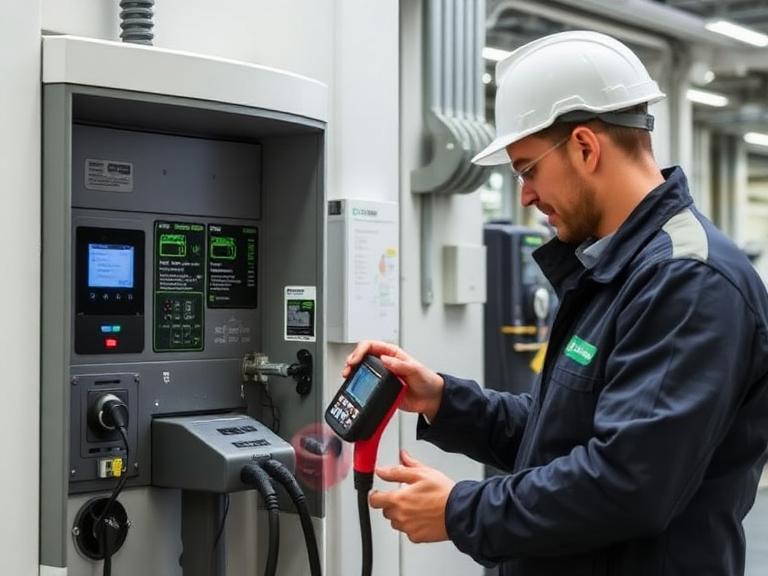
Providing specialized, high-precision Lift Guide Rail Repair in Hyderabad, field engineers utilize advanced laser-guided measuring systems, specialized hydraulic alignment jigs, and certified structural anchoring procedures to restore hoistway geometry to sub-millimeter accuracy.
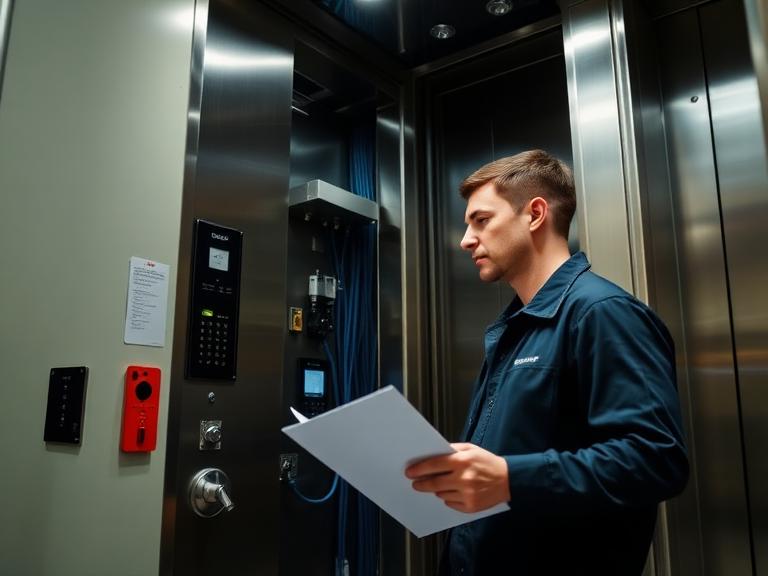
Crucial Roles of Elevator Guide Rails
To understand why precision alignment is vital, it helps to examine the multiple functions guide rails perform within a hoistway shaft:
- Directional Trajectory Control: Guide rails define the exact vertical flight path of the elevator cab and counterweight frame, preventing rotational twisting or horizontal deflection.
- Safety Device Anchorage Surface: In the event of an overspeed condition or rope failure, the elevator’s instantaneous or progressive safety gear grips directly onto the guide rail blades. The rail must withstand extreme mechanical impact forces without buckling or shearing off wall anchors.
- Weight Distribution & Force Absorption: During uneven passenger or freight loading, the guide rails absorb off-center bending moments, distributing loads safely back into the building’s structural columns or concrete shear walls.
- Vibration Damping: Seamlessly machined rail joints ensure that roller assemblies transit smoothly without transferring impact chatter into the elevator cab.
                     +---------------------------------------+
                     |        ELEVATOR HOISTWAY SHAFT        |
                     +---------------------------------------+
                                         |
               +-------------------------+-------------------------+
               |                                                   |
    [Left Guide Rail Track]                             [Right Guide Rail Track]
               |                                                   |
      +-----------------+                                 +-----------------+
      | Wall Bracket    |                                 | Wall Bracket    |
      | Anchors         |                                 | Anchors         |
      +--------+--------+                                 +--------+--------+
               |                                                   |
               +--------------------> [ DBG ] <--------------------+
                                (Distance Between Guides)
                                         |
                                         v
                         +-------------------------------+
                         |      ELEVATOR CAB FRAME       |
                         |  (Guided by Roller/GIB Shoes) |
                         +-------------------------------+
Common Causes of Guide Rail Misalignment in Hyderabad Properties
Hyderabad’s rapid vertical infrastructure expansion across areas like Gachibowli, Hitec City, Kondapur, Financial District, and Uppal brings specific engineering challenges. Hoistway structural geometry is affected by several regional environmental and structural factors:
1. Structural Building Settlement
Newly constructed high-rises and commercial towers undergo natural structural settling over their first 3 to 5 years. As concrete slabs compress and foundations settle, hoistway walls experience subtle vertical and lateral displacement. This forces rigid steel guide rails out of vertical plumb, causing localized bowing, pinching, or widening of the track distance.
2. Moisture, High Humidity & Corrosion
Basement hoistways, pit areas, and poorly ventilated shafts in humid environments are highly vulnerable to steel oxidation. Moisture accumulation causes surface rust along rail blades and corrodes wall anchor bolts. Rust buildup on fishplate joint brackets causes expansion stress, throwing adjoining rail sections out of flush alignment.
3. Loose Wall Bracket Assemblies
Elevators undergo thousands of mechanical cycles daily. Over time, continuous dynamic vibrations loosen expansion bolts, bracket clamps, and anchor fasteners secured to the masonry or shear walls. A single loose wall bracket compromises rail rigidity across several vertical meters.
4. Thermal Expansion & Contraction
Hyderabad experiences distinct seasonal temperature variations. Continuous thermal expansion and contraction cause unanchored or improperly gapped guide rails to expand vertically. Without sufficient thermal gap clearance at the top and bottom of the shaft, the rail column buckles outward under compression stress.
5. Mechanical Impact & Emergency Safety Tripping
Unbalanced freight distribution in commercial lifts or accidental impact during heavy construction loading exerts severe lateral forces against rail blades. Furthermore, when an overspeed governor triggers safety wedges to bite into the rail, the localized surface suffers extreme gouging, metal displacement, or permanent bending.
Critical Symptoms Requiring Immediate Rail Repair
Ignoring guide rail misalignment accelerates wear across every electro-mechanical component of the elevator. Building managers and maintenance teams should watch for these clear diagnostic indicators:
- Horizontal Swaying & Cabin Shaking: Passengers feel side-to-side oscillation or vibration while traveling at nominal speed.
- Loud Metallic Grinding or Screeching: Caused by dry guide shoe inserts or misaligned rail joints rubbing directly against steel rail flanges.
- Uneven Wear on Guide Shoes / Rollers: Maintenance inspections reveal premature, lopsided wearing of polyurethane roller tires or nylon guide gib inserts.
- Frequent Nuisance Tripping of Safety Gear: Misaligned rails with narrowing Distance Between Guides (DBG) trigger mechanical binding, causing safety jaws to drag or trip the elevator unexpectedly.
- Cabin Leveling Inconsistencies: Rail binding adds mechanical resistance, forcing traction motors to draw excess current and causing poor floor leveling precision.
Specialized Tools Used in Modern Guide Rail Repair
Repairing elevator guide rails requires specialized optical and mechanical instruments:
| Tool / Instrument | Engineering Purpose |
| Dual-Axis Laser Alignment Kit | Emits high-precision vertical reference beams down the full height of the hoistway to map rail deviations in real time. |
| DBG Vernier Gauge Calipers | Accurately measures the Distance Between Guides across both car and counterweight paths within $\pm 0.05\text{ mm}$. |
| Hydraulic Rail Straightening Press | Applies localized force to eliminate minor bends, bows, or twists in mounted steel rails without requiring structural removal. |
| Electronic Dial Indicators | Measures joint flushness, stepped offsets, and rail face parallelism across fishplate connections. |
| Torque Wrench & Anchor Testers | Verifies wall bracket anchor bolt tightness according to structural torque specifications (N·m). |
| Precision Rail Milling Tools / Files | Smooths joint transitions and removes metal burrs or score marks left by safety gear deployments. |
Step-by-Step Guide Rail Realignment & Repair Process
Executing a complete guide rail realignment requires meticulous step-by-step engineering procedures to ensure absolute passenger safety and full code compliance:
+-------------------------------------------------------------------+
|  STEP 1: Full Hoistway Survey & Laser Alignment Mapping           |
+-------------------------------------------------------------------+
                                  |
                                  v
+-------------------------------------------------------------------+
|  STEP 2: Wall Anchor Bracket Rigidity & Structural Inspection     |
+-------------------------------------------------------------------+
                                  |
                                  v
+-------------------------------------------------------------------+
|  STEP 3: DBG Adjustment & Shim Pack Recalibration                 |
+-------------------------------------------------------------------+
                                  |
                                  v
+-------------------------------------------------------------------+
|  STEP 4: Joint Filing, Fishplate Torquing & Surface Processing   |
+-------------------------------------------------------------------+
                                  |
                                  v
+-------------------------------------------------------------------+
|  STEP 5: Lubrication & High-Speed Ride Quality Testing           |
+-------------------------------------------------------------------+
Step 1: Full Hoistway Survey & Laser Alignment Mapping
- Technicians lock out the elevator system following strict Lockout/Tagout (LOTO) safety standards.
- A dual-axis laser emitter is secured at the top machine room slab or top floor beam, projecting true vertical plumb lines down to the hoistway pit.
- Mounted on the elevator car top, technicians travel down the shaft, taking optical measurements at every wall bracket interval (typically every 2.5 to 3 meters).
- Deviations in Front-to-Back (FB) alignment, Side-to-Side (SS) parallelism, and Distance Between Guides (DBG) are plotted on a technical measurement grid.
Step 2: Wall Anchor Bracket Rigidity & Structural Inspection
- Every wall bracket, anchor bolt, chemical fastener, and beam clip is visually inspected and torque-tested.
- Weakened masonry anchor points are replaced with high-tensile, heavy-duty chemical anchor bolts.
- Bent or deformed mounting brackets are straightened or replaced with custom-fabricated heavy-gauge steel brackets.
Step 3: DBG Adjustment & Shim Pack Recalibration
- Using hydraulic rail jacks and alignment clamps, technicians adjust the position of the rail relative to its wall bracket.
- High-precision slotted steel shim packs (ranging from $0.5\text{ mm}$ to $3.0\text{ mm}$ thickness) are inserted or removed behind the rail clip seat to achieve exact target DBG specs.
- Bracket isolation pads are checked to ensure noise and vibration damping are fully restored.
Step 4: Joint Filing, Fishplate Torquing & Surface Processing
- Rail section joints connected via steel fishplates are inspected for stepped gaps or lip offsets.
- High-strength fishplate bolts are torqued to manufacturer specifications.
- Technicians use precision guide rail joint files and pneumatic sanders to smooth out step mismatches, creating a seamless, continuous running surface across every rail section.
- Any surface gouges, rust patches, or score marks left by safety gear jaws are carefully ground down, treated with rust inhibitor, and polished.
Step 5: Lubrication & High-Speed Ride Quality Testing
- Rail blades are cleaned using industrial solvents to strip hardened grease, dust, and metal shavings.
- High-grade, dust-resistant elevator guide rail oil or specialized synthetic lubricant is applied evenly via automatic lubricator reservoirs or felt wipers.
- The elevator is restored to operational mode, and vibration test runs are conducted using three-axis accelerometer sensors to confirm smooth, whisper-quiet travel.
Comparison of Guide Rail Types & Technical Specifications
Selecting the correct guide rail profiles during partial or complete replacement is critical for operational longevity. Below is an overview of industry-standard steel T-rail specifications used across commercial and residential elevators:
| Rail Type / Model | Processing Method | Blade Width (k) | Base Width (n) | Height (h) | Typical Application |
| T45 / A | Cold-Drawn | $5\text{ mm}$ | $45\text{ mm}$ | $50\text{ mm}$ | Low-rise home lifts, counterweight frames, small dumbwaiters. |
| T50 / A | Cold-Drawn | $9\text{ mm}$ | $50\text{ mm}$ | $50\text{ mm}$ | Residential counterweights, light passenger lifts. |
| T70-B / T70-A | Machined / Cold-Drawn | $10\text{ mm}$ | $70\text{ mm}$ | $65\text{ mm}$ | Mid-rise residential elevators up to 1.5 m/s speed. |
| T89-B | Machined Precision | $16\text{ mm}$ | $89\text{ mm}$ | $62\text{ mm}$ | Commercial passenger lifts, high-traffic apartment complexes. |
| T127-1/B | Machined Heavy-Duty | $16\text{ mm}$ | $127\text{ mm}$ | $89\text{ mm}$ | High-speed towers, heavy goods lifts, hospital stretcher elevators. |
Service Coverage Across Hyderabad & Secunderabad
Field service units provide round-the-clock rapid response across all major zones in the Greater Hyderabad region:
+---------------------------------------------------------------------------------+
|                         HYDERABAD SERVICE COVERAGE ZONES                         |
+---------------------------------------------------------------------------------+
| • IT & Financial Hubs    : Hitec City, Gachibowli, Kondapur, Nanakramguda       |
| • Central Business District: Banjara Hills, Jubilee Hills, Somajiguda, Abids      |
| • Residential Clusters    : Kukatpally (KPHB), Miyapur, Bachupally, Nizampet      |
| • Secunderabad & East    : AS Rao Nagar, Malkajgiri, Uppal, Cherlapally          |
| • Industrial Belts       : Balanagar, Jeedimetla, Patancheru, Kattedan            |
+---------------------------------------------------------------------------------+
Preventive Maintenance Tips for Long Guide Rail Service Life
Proper ongoing care prevents major structural rail failures and costly hoistway overhaul projects:
- Maintain Wiping Felt Condition: Ensure guide shoe felt wipers are clean, saturated with oil, and free from embedded sand or grit.
- Conduct Semi-Annual Bolt Tightening: Request technicians to check torque levels on wall bracket anchor bolts during routine semi-annual preventive maintenance visits.
- Monitor Pit Environmental Conditions: Prevent water accumulation in the elevator pit. Standing water evaporates into the shaft, creating excessive humidity that corrodes rail bases.
- Use High-Grade Synthetic Lubricants: Avoid low-quality, sticky greases that attract airborne dust and form abrasive sludge along the rail faces.
- Inspect Guide Shoe Inserts Regularly: Replace worn nylon gibs or damaged roller wheels immediately. Worn guide shoes allow the metal car frame to rub directly against the rail blade.

Frequently Asked Questions (FAQs)
1. What are the common signs that a lift guide rail needs repair?
Common indicators include horizontal cabin vibrations, side-to-side swaying, metallic grinding noises, premature wear on guide shoes or roller guides, and sudden tripping of the safety gear mechanism.
2. Why do lift guide rails lose alignment in Hyderabad buildings?
Guide rail misalignment is primarily caused by structural building settlement, seismic activity, thermal expansion/contraction due to local climate variations, loose wall anchor brackets, or accidental impact during heavy material loading.
3. How much does lift guide rail repair cost in Hyderabad?
Minor realignment and bracket tightening usually cost between ₹3,500 and ₹8,000 per shaft run. Extensive laser alignment, fishplate replacement, or partial rail section swaps for multi-story buildings range from ₹15,000 to ₹45,000+ depending on travel height and rail specification (T45, T70, T89, T127).
4. What tool is used to precisely measure guide rail alignment?
Technicians use dual-axis laser alignment systems, precision magnetic plumb lines, rail gauge calipers, and electronic dial indicators to measure verticality, blade distance (DBG – Distance Between Guides), and twisted section angles within 0.1mm tolerance.
5. How long does a complete guide rail repair or realignment take?
Standard realignment for a 4 to 8-story residential building takes roughly 1 to 2 working days. High-rise commercial elevator shafts requiring structural bracket rebuilding or joint filing may take 3 to 5 days.
6. Can damaged or bent guide rails be straightened on-site, or must they be replaced?
Minor bow or twist deviations within standard tolerance thresholds can be corrected on-site using specialized hydraulic rail benders and adjustable bracket shim packs. However, severely bent rails, deep gouges, or structural fractures require complete section replacement.
7. What is DBG, and why is it crucial for lift performance?
DBG stands for Distance Between Guides. It represents the exact parallel spacing between opposing guide rails. If the DBG varies along the hoistway, the car frame will bind (if DBG narrows) or sway excessively (if DBG widens), leading to severe safety device engagement risks.
8. Do you provide emergency guide rail breakdown services in Hyderabad?
Yes, emergency technician teams are available 24/7 across Hyderabad, including IT corridors like Hitec City, Gachibowli, Kondapur, and residential zones like Kukatpally and Secunderabad, to fix jammed safety gears caused by rail misalignments.
9. What is the difference between machined guide rails and cold-drawn guide rails?
Cold-drawn guide rails (e.g., T45, T50) are typically used for lower speed and counterweight applications. Machined guide rails (e.g., T70, T89, T127) have precision-milled surfaces and joint tongues, making them suitable for high-speed, high-capacity passenger elevators requiring ultra-smooth travel.
10. How does improper guide rail lubrication affect elevator health?
Insufficient or dirty lubrication causes high friction, rapid guide shoe insert wear, metal blade rust, and loud screeching noises. Over-lubrication or using incorrect grease can interfere with safety gear braking action.
11. Which elevator brands do you repair rail systems for?
Service support covers guide rail systems for all major manufacturers, including Otis, Schindler, Kone, Thyssenkrupp (TK Elevator), Mitsubishi, Johnson Elevators, and local high-capacity goods lift installations.
12. Are guide rail repairs covered under standard Annual Maintenance Contracts (AMC)?
Routine cleaning, surface inspection, and light lubrication are covered under basic AMCs. Major structural realignments, bracket welding, section replacements, or building-settlement repairs are specialized structural overhaul jobs billed separately.
13. How often should elevator guide rails undergo alignment checks?
Guide rails should undergo a comprehensive laser audit during mandatory annual safety inspections or immediately following noticeable structural settlement, building renovations, or seismic activity.
14. What safety standards govern lift guide rail repairs in Telangana?
All repairs conform strictly to the Telangana Lifts and Escalators Act regulations, Bureau of Indian Standards (IS 14665 / IS 15785), and international EN 81-20/50 elevator safety codes.
15. How can I book a guide rail inspection in Hyderabad?
Book an on-site engineering survey by calling our 24/7 hotline or filling out the service inspection form on our official website. A specialized hoistway engineer will arrive within 2 to 4 hours.