Table of Contents
EV Charging for Apartments in Hyderabad | Smart Residential EV Charging Solutions
EV Charging for Apartments in Hyderabad enables residential communities, gated societies, and apartment complexes to provide safe, reliable, and future-ready charging facilities for electric vehicle owners. Modern apartment EV charging solutions include dedicated chargers, shared charging stations, smart energy management, user authentication, billing systems, and scalable infrastructure that supports the growing adoption of electric vehicles.
Electric vehicles are becoming increasingly popular across Hyderabad as residents seek cleaner, more economical, and environmentally responsible transportation options. While many EV owners can charge their vehicles at independent homes, apartment residents often face unique challenges related to parking, electrical access, and shared infrastructure.
Residential apartment communities now play a crucial role in supporting electric mobility by providing convenient charging facilities within their premises. Whether serving a few EV owners today or preparing for future demand, apartment charging infrastructure improves convenience, enhances property value, and creates a more sustainable living environment.
With proper planning and professional implementation, EV Charging for Apartments in Hyderabad can be designed to meet the needs of residents while ensuring safety, efficient power management, and long-term scalability.
Why Apartment EV Charging is Becoming Essential
The transition toward electric mobility is accelerating, and residential communities are expected to support this change by offering reliable charging infrastructure.
Apartment charging solutions provide residents with the convenience of charging their vehicles where they live, eliminating the need to rely exclusively on public charging stations.
Modern apartment charging infrastructure also helps residential communities remain competitive in Hyderabad’s evolving real estate market.
Benefits of EV Charging for Apartment Communities
Installing EV charging infrastructure creates value for residents, apartment associations, builders, and property managers.
Convenience for Residents
Home remains the most convenient location for charging an electric vehicle.
Apartment charging allows residents to:
- Charge overnight
- Begin each day with a charged vehicle
- Reduce dependence on public charging stations
- Save time during daily commuting
Convenient charging significantly improves the ownership experience for EV users.
Future-Ready Residential Communities
Electric vehicle adoption is expected to continue growing over the coming years.
Communities that invest in charging infrastructure today are better prepared for future demand without requiring extensive modifications later.
Planning for expansion allows additional chargers to be added as more residents purchase electric vehicles.
Improved Property Value
Residential developments offering EV charging amenities are increasingly viewed as future-ready properties.
Charging infrastructure can:
- Enhance property appeal
- Improve buyer interest
- Increase tenant satisfaction
- Differentiate apartment communities in competitive markets
Environmental Sustainability
Apartment EV charging contributes to cleaner transportation by encouraging residents to adopt electric vehicles.
Benefits include:
- Lower vehicle emissions
- Improved urban air quality
- Reduced dependence on fossil fuels
- Support for sustainable residential development
Challenges Faced by Apartment Residents
Unlike independent homes, apartment communities share common electrical infrastructure and parking facilities.
Some common challenges include:
- Limited electrical capacity
- Shared parking spaces
- Multiple EV owners
- Energy allocation
- Billing management
- Charger accessibility
- Parking management
- Future expansion planning
Professional charging solutions are designed to address these challenges while maintaining fairness and operational efficiency.
Types of Apartment EV Charging Solutions
Different residential communities require different charging approaches depending on the number of residents, available parking, and expected demand.
Dedicated Resident Chargers
Dedicated chargers are assigned to individual parking spaces.
Advantages include:
- Exclusive resident access
- Predictable charging availability
- Personalized billing
- Convenient overnight charging
These chargers are ideal for residents with permanent parking spaces.
Shared Community Charging Stations
Apartment associations may install shared charging stations accessible to multiple residents.
Benefits include:
- Lower initial investment
- Efficient use of shared infrastructure
- Flexible charging access
- Suitable for communities with limited EV ownership
As EV adoption increases, additional chargers can be added.
Visitor Charging
Apartment communities can also provide charging facilities for guests and visitors.
Benefits include:
- Improved visitor convenience
- Enhanced community amenities
- Support for electric mobility beyond residents
AC EV Chargers for Apartments
Most residential communities primarily use AC chargers because vehicles typically remain parked overnight or for extended periods.
Advantages include:
- Cost-effective installation
- Suitable for overnight charging
- Lower electrical demand
- Efficient daily charging
- Easy integration into residential parking
AC charging meets the needs of most apartment residents.
DC Fast Chargers for Residential Communities
While less common in residential settings, DC fast chargers may be appropriate for:
- Premium residential developments
- Large gated communities
- Mixed-use developments
- Visitor charging
- Commercial-residential complexes
Fast chargers reduce charging time but generally require greater electrical capacity.
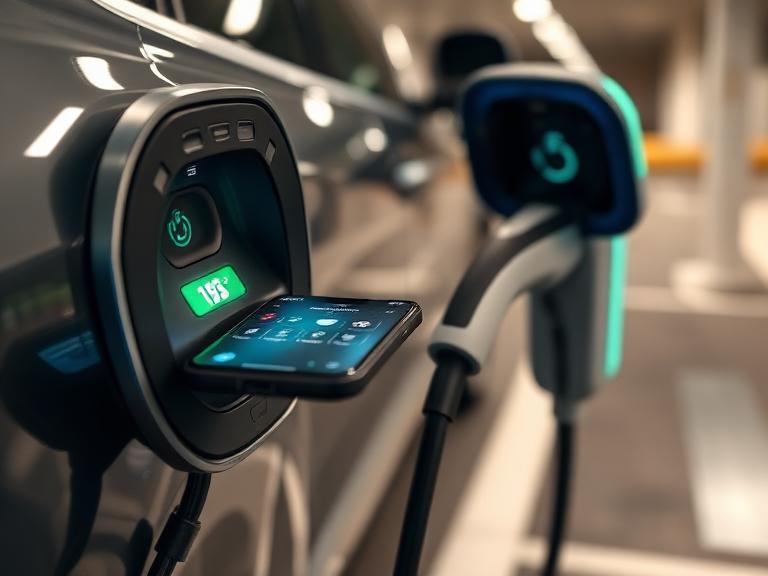
Smart Features in Apartment EV Charging
Modern apartment charging systems incorporate advanced digital technologies that simplify charging management.
Popular features include:
- Mobile application support
- RFID authentication
- QR code access
- User-specific billing
- Smart scheduling
- Load balancing
- Cloud monitoring
- Remote diagnostics
- Charging history
- Energy monitoring
- Software updates
- Access control
These intelligent capabilities help apartment associations manage charging fairly while providing residents with a convenient experience.
Who Benefits from Apartment EV Charging?
Apartment charging solutions serve multiple stakeholders.
Residents
Residents enjoy convenient, reliable, and secure charging close to home.
Apartment Associations (RWAs)
Resident Welfare Associations can efficiently manage shared charging infrastructure while supporting community sustainability initiatives.
Builders and Developers
Developers offering EV-ready infrastructure increase the attractiveness of new residential projects and prepare for future buyer expectations.
Property Management Companies
Professional charging infrastructure simplifies operations while improving resident satisfaction.
Facility Managers
Smart charging platforms provide centralized monitoring, helping facility managers oversee charging sessions, energy usage, and maintenance requirements.
Hyderabad’s Growing Demand for Residential EV Charging
Hyderabad continues to experience rapid growth in electric vehicle adoption, driven by expanding charging infrastructure, increasing model availability, and greater environmental awareness.
As more apartment residents purchase electric cars, residential charging demand is expected to increase significantly.
Apartment communities that proactively invest in charging infrastructure can better accommodate future residents while supporting Hyderabad’s transition toward sustainable urban mobility.
Why Professional Planning Matters
Apartment EV charging projects require careful consideration of electrical capacity, parking layouts, resident usage patterns, billing methods, safety standards, and future scalability.
Professional planning helps ensure the charging infrastructure operates safely, efficiently, and fairly for all residents.
ZyCharge Energies Pvt. Ltd. provides end-to-end apartment EV charging solutions, including site assessment, charger selection, installation, commissioning, smart charging management, maintenance, and scalable infrastructure for residential communities across Hyderabad.
Why Choose ZyCharge Energies Pvt. Ltd.?
Choosing the right EV charging partner is essential for ensuring long-term reliability and performance. ZyCharge Energies Pvt. Ltd. specializes in designing and deploying residential EV charging solutions tailored to apartment complexes, gated communities, and housing societies. From initial consultation and electrical assessment to installation, commissioning, and ongoing maintenance, ZyCharge delivers solutions that prioritize safety, efficiency, and future expansion.
With expertise in AC EV chargers, smart charging systems, user authentication, load management, and Charge Point Operator (CPO) services, ZyCharge helps apartment associations and developers create seamless charging experiences for residents.
How Apartment EV Charging Works
Apartment EV charging systems are designed to provide residents with safe, convenient, and efficient charging within shared residential communities. Unlike independent homes, apartment complexes require coordinated infrastructure that accommodates multiple users while ensuring fair electricity distribution and effective management.
A modern apartment charging system typically includes:
- EV charging equipment
- Electrical distribution infrastructure
- Smart energy management software
- User authentication
- Individual billing
- Load balancing
- Remote monitoring
- Maintenance support
Together, these components create a reliable charging ecosystem for residents.
Step-by-Step Apartment EV Charger Installation Process
Professional installation ensures that apartment charging infrastructure operates safely and efficiently for years to come.
Step 1: Site Assessment
The first stage is a comprehensive evaluation of the apartment premises.
The assessment includes:
- Parking layout
- Existing electrical infrastructure
- Transformer capacity
- Available power supply
- Parking ownership
- Cable routing
- Internet connectivity
- Future expansion possibilities
This assessment helps determine the most suitable charging solution.
Step 2: Resident Requirement Analysis
Apartment associations should understand current and future charging demand.
Factors include:
- Number of EV owners
- Expected EV adoption
- Charging frequency
- Vehicle types
- Visitor charging needs
- Dedicated vs shared parking
Planning ahead reduces the need for major infrastructure changes later.
Step 3: Selecting the Right Charging Solution
The charging system should match the community’s requirements.
Dedicated Chargers
Suitable for:
- Assigned parking spaces
- Individual apartment owners
- Long-term residents
Advantages:
- Private access
- Personalized billing
- Guaranteed charger availability
Shared Chargers
Suitable for:
- Apartment communities with fewer EV owners
- Visitor parking
- Shared residential facilities
Advantages:
- Lower initial investment
- Better charger utilization
- Flexible charging schedules
Step 4: Electrical Infrastructure Preparation
Professional installers prepare the electrical system by:
- Installing distribution panels
- Routing charging cables
- Providing earthing
- Installing surge protection
- Adding circuit breakers
- Configuring network connectivity
Safety remains the highest priority throughout installation.
Step 5: Commissioning
Before handover, every charger undergoes:
- Functional testing
- Electrical inspection
- Safety verification
- Software configuration
- Network testing
- User onboarding
Only after successful testing is the charging system made available for residents.

Electrical Planning for Apartment Communities
Residential charging projects require careful power planning.
Key considerations include:
Existing Electrical Capacity
The apartment’s incoming electrical supply must be evaluated before installing chargers.
Transformer Capacity
Large communities may require transformer upgrades as EV adoption increases.
Distribution Network
Electrical panels and distribution systems should support current and future charging loads.
Future Scalability
Infrastructure should allow additional charging points without requiring complete redesign.
Smart Load Balancing
One of the biggest challenges in apartment charging is managing simultaneous charging sessions.
Smart load balancing automatically distributes available electrical power among connected chargers.
Benefits include:
- Prevents electrical overload
- Maximizes available power
- Supports multiple users
- Reduces infrastructure upgrades
- Improves charging efficiency
This technology enables communities to support more EVs using existing electrical infrastructure where feasible.
Individual Billing Solutions
Apartment communities often require transparent electricity billing.
Modern charging platforms offer:
- Resident-wise billing
- RFID authentication
- Mobile app payments
- QR code access
- Monthly usage reports
- Automated billing
- Energy consumption history
These systems simplify charging management for apartment associations.
User Authentication
Secure charging access prevents unauthorized charger usage.
Popular authentication methods include:
- RFID cards
- Mobile applications
- QR code scanning
- PIN authentication
- User accounts
Authentication ensures that only authorized residents or approved visitors use the charging facilities.
Safety Measures for Apartment EV Charging
Safety is critical in shared residential environments.
Professional charging installations include:
- Proper earthing
- Surge protection
- Residual Current Devices (RCDs)
- Circuit breakers
- Fire-resistant cables
- Emergency isolation switches
- Weather-protected enclosures
- Secure cable management
Routine inspections further improve long-term operational safety.
Maintenance of Apartment Charging Infrastructure
Regular preventive maintenance helps maintain reliable performance.
Typical maintenance includes:
- Visual inspections
- Cable condition checks
- Connector inspection
- Electrical testing
- Software updates
- Network diagnostics
- Cleaning charging equipment
- Performance verification
- Safety inspections
Preventive servicing minimizes downtime and extends equipment life.
Apartment EV Charging Best Practices
Apartment associations should consider the following recommendations:
- Plan charging infrastructure for future EV growth.
- Choose scalable charging systems.
- Establish fair charging policies.
- Provide clear parking guidelines.
- Monitor charger utilization.
- Schedule preventive maintenance.
- Educate residents on charging etiquette.
- Review electrical capacity periodically.
- Implement smart energy management.
- Maintain accurate billing records.
Cost Factors
Several variables influence apartment EV charging projects.
These include:
| Factor | Impact |
|---|---|
| Number of Chargers | Larger installations require more equipment and infrastructure. |
| Charger Type | AC chargers generally cost less than DC fast chargers. |
| Electrical Upgrades | Existing infrastructure may require enhancements. |
| Cable Length | Longer cable routes increase installation requirements. |
| Civil Works | Trenching, foundations, and mounting structures may be needed. |
| Smart Software | Billing and management platforms influence project scope. |
| Future Expansion | Scalable infrastructure may affect initial planning costs. |
A professional site assessment provides accurate project estimates.
Future Trends in Apartment EV Charging
Residential charging technology continues to evolve.
Emerging trends include:
- AI-powered energy optimization
- Solar-powered charging integration
- Battery energy storage systems
- Vehicle-to-Grid (V2G) technology
- Dynamic electricity pricing
- Wireless charging research
- Smart residential energy management
- Community charging networks
- Renewable energy integration
- Cloud-based charger management
These innovations will make apartment charging more efficient and sustainable.
Why Choose ZyCharge Energies Pvt. Ltd.
Developing apartment EV charging infrastructure requires expertise in electrical engineering, charger technology, safety standards, and smart energy management.
ZyCharge Energies Pvt. Ltd. offers comprehensive residential EV charging solutions for apartment communities across Hyderabad. Its services include site assessment, AC EV charger installation, smart charging management, Charge Point Operator (CPO) services, commissioning, preventive maintenance, and scalable charging infrastructure tailored to the needs of apartment associations, builders, developers, and property managers.
Frequently Asked Questions
1. Can apartment complexes install EV charging stations?
Yes. Apartment associations and developers can install dedicated or shared EV charging infrastructure based on community requirements.
2. Which charger type is best for apartments?
AC EV chargers are generally the preferred choice because vehicles remain parked for extended periods, allowing convenient overnight charging.
3. Can residents be billed individually?
Yes. Smart charging systems support user-specific billing, usage tracking, and automated payment options.
4. What is load balancing?
Load balancing distributes available electrical power efficiently across multiple chargers, preventing overloads and improving charging performance.
5. Are apartment EV chargers safe?
Professionally installed charging systems include multiple electrical safety features such as circuit protection, surge protection, earthing, and regular maintenance.
6. Can visitors use apartment charging stations?
Yes. Apartment communities may provide dedicated visitor charging facilities depending on community policies.
7. Can charging infrastructure be expanded later?
Yes. Proper planning allows additional chargers to be added as EV adoption increases.
8. How often should apartment chargers be maintained?
Routine inspections and preventive maintenance should be performed according to manufacturer recommendations and operational requirements.
9. Can apartment charging systems be monitored remotely?
Yes. Modern charging platforms support cloud monitoring, usage analytics, fault alerts, and software updates.
10. Why should apartment communities invest in EV charging?
Apartment charging improves resident convenience, enhances property value, supports sustainability goals, and prepares communities for future electric vehicle adoption.
Conclusion
Electric mobility is reshaping residential communities across Hyderabad, making apartment EV charging an essential part of modern housing infrastructure. Providing safe, smart, and scalable charging facilities enhances the living experience for residents while helping apartment associations and developers prepare for increasing EV ownership.
Whether implementing dedicated chargers for individual parking spaces or shared charging solutions for entire communities, professional planning ensures reliable performance, efficient energy management, and long-term scalability. By partnering with experienced providers, apartment communities can build future-ready charging infrastructure that supports sustainable transportation and adds lasting value to residential developments.