Table of Contents
Ultimate Blueprint for DC Fast Charger Setup in Hyderabad
Hyderabad stands as one of India’s leading metropolitan centers for electric vehicle adoption. Driven by progressive state mandates, dedicated power tariffs, and a 100% road tax and registration fee exemption through December 31, 2026, the city’s EV population is expanding rapidly across private passenger cars, rideshare fleets (e.g., BluSmart, Uber EV), and commercial delivery fleets.
+-------------------------------------------------------------------------------+
|             HYDERABAD DC FAST CHARGING ECOSYSTEM STRATEGY                     |
+-------------------------------------------------------------------------------+
|                                                                               |
|  +-----------------------+     +--------------------+     +-----------------+ |
|  |   TGREDCO NODAL HUB   | --> | TGSPDCL POWER GRID | --> | TIME-OF-DAY TARIFF|
|  | Single-Window Approvals|     | LT-IX / HT-IX EV   |     | ₹5 - ₹7 / kWh   | |
|  +-----------------------+     +--------------------+     +-----------------+ |
|                                                                               |
|  +-----------------------+     +--------------------+     +-----------------+ |
|  | HIGH-DENSITY CLUSTERS | --> | HARDWARE MANDATE   | --> | TARGET PAYBACK  | |
|  | IT Hubs, ORR, Hubs    |     | Dual CCS2 DC 60kW+ |     | 2.5 - 3.5 Years | |
|  +-----------------------+     +--------------------+     +-----------------+ |
+-------------------------------------------------------------------------------+
Installing a commercial DC fast charger setup in Hyderabad offers landowners, fleet operators, and Charge Point Operators (CPOs) a strong infrastructure investment opportunity. This guide details statutory requirements, grid connection steps with TGSPDCL, financial models, engineering setup, and strategic locations to establish a profitable DC fast charging hub in Hyderabad.
State Policies, Nodal Agencies & Regulatory Framework
Telangana Renewable Energy Development Corporation Limited (TGREDCO)
TGREDCO is the State Nodal Agency (SNA) that coordinates and approves public charging infrastructure across Telangana. TGREDCO manages single-window clearances, site empanelment, public tenders, and subsidies.
- Public Fast Charger Initiatives: TGREDCO manages projects deploying dual-gun 60 kW DC fast chargers across key commercial hubs in Hyderabad, Rangareddy, and Medchal-Malkajgiri districts to build a connected charging network.
- Empanelment Program: Private CPOs and business entities can register with TGREDCO to secure streamlined clearances for setting up commercial charging points.
PM E-Drive Scheme & Upstream Infrastructure Subsidies
Under the central government’s PM E-Drive Program, implemented locally by TGREDCO, operators building public DC fast charging hubs can receive up to 80% subsidies on upstream power infrastructure. This covers:
- Transformers and Ring Main Units (RMU)
- High Tension (HT) cables and switchgear panels
- Civil foundations, earthing pits, and meter installations
License Exemptions for Charging Operations
Per Ministry of Power guidelines adopted by Telangana, operating a public DC fast charger does not require an electricity distribution license. Supplying power to an EV battery is categorized legally as a Service Delivery, allowing CPOs to charge customers transparent, market-driven tariffs per kilowatt-hour (kWh).
Electricity Tariffs & DISCOM Coordination in Hyderabad
Securing a reliable electricity connection from the local distribution company is essential for running high-power DC fast chargers (60kW, 120kW, or 180kW).
DISCOM: TGSPDCL
The Telangana Southern Power Distribution Company Limited (TGSPDCL) supplies grid power across all sectors of Hyderabad, Secunderabad, Medchal-Malkajgiri, and Rangareddy.
TGERC Time-of-Day (ToD) Tariff Structure
The Telangana State Electricity Regulatory Commission (TGERC) mandates a promotional tariff category for public EV charging stations with an average Cost of Service (CoS) base rate of ₹6.00 to ₹6.04 per kWh. TGERC applies a Time-of-Day (ToD) tariff structure to balance grid demand:
| Time Window / Slot | ToD Tariff Rate | Grid Condition / Impact |
| Off-Peak Night: 10:00 PM – 6:00 AM | ₹5.00 / kWh | Ideal for fleet charging & overnight top-ups |
| Normal Daytime: 6:00 AM – 6:00 PM / 10:00 PM | ₹6.00 / kWh | Standard rate for daytime charging |
| Peak Hours: 6:00 AM – 10:00 AM & 6:00 PM – 10:00 PM | ₹7.00 / kWh | High-demand peak billing slot |
| Fixed / Demand Charges | ₹100 / kVA / Month | Fixed capacity reservation fee |
+--------------------------------------------------------------------------------+
|            TGSPDCL POWER CONNECTION APPROVAL WORKFLOW IN HYDERABAD             |
+--------------------------------------------------------------------------------+
|                                                                                |
|  [ Online Application ] --> [ Field Inspection ]  --> [ Demand Note Payment ] |
|  TGSPDCL EV Category Portal   TGSPDCL Engineer Audit   Infrastructure & Deposit|
|                                                                                |
|  [ Civil Construction ] --> [ Transformer Yard Setup]--> [ CEIG Safety & On ]  |
|  Bay, Earthing, Panels      11kV Step-Down Yard        Meter Energization      |
+--------------------------------------------------------------------------------+
Steps to Acquire a Commercial EV Connection from TGSPDCL
- Determine Sanctioned Load: Calculate connected power needs (e.g., One 60 kW Fast Charger + Auxiliaries = ~70 kVA LT-IX load; Two 120 kW Fast Chargers = ~270 kVA HT-IX load).
- Submit Digital Application: Apply through the TGSPDCL online portal selecting Category LT-IX (for load $\le 70\text{ kVA}$) or HT-IX (for load $> 70\text{ kVA}$).
- Feasibility Audit: TGSPDCL engineers inspect the location to evaluate nearby 11kV/33kV distribution lines and transformer capacity.
- Pay Demand Note: Remit required line charges, development fees, and security deposits.
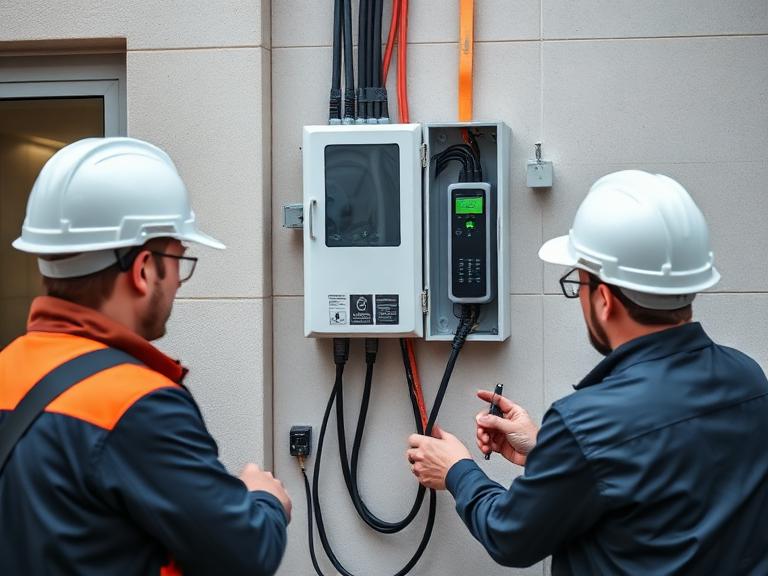
- Substation & Meter Installation: Erect a dedicated transformer yard if needed, complete earthing pits, and pass Chief Electrical Inspectorate to Government (CEIG) safety audits to receive a bi-directional smart meter.
Prime High-Yield Locations Across Hyderabad
Station placement directly influences daily vehicle count, charging session frequency, and revenue. High-performing urban fast-charging hubs rely on accessibility, fleet concentration, and local amenities.
                      HYDERABAD URBAN FAST CHARGING CORRIDORS

                                [ MEDCHAL / ORR EXIT 6 ]
                                           |
                                       (NH-44 North)
                                           |
  [ PATANCHERU ] -- (NH-65 West) -- [ HITEC CITY / FINANCIAL DIST ] -- (NH-163) -- [ UPPAL / WARANGAL ]
                                           |
                                      (ORR Ring Road)
                                           |
                                 [ SHAMSHABAD AIRPORT ]
Top Commercial Zones for Fast Chargers in Hyderabad
1. IT & Financial Corridors (Gachibowli, HITEC City, Nanakramguda, Madhapur)
- Target Sites: IT park parking lots, commercial malls, corporate office complexes, hotel driveways.
- Driver Base: High concentration of tech-sector private EV owners, corporate electric cabs, and premium EV SUVs needing quick top-ups.
2. Commercial & High-Density Retail Zones (Banjara Hills, Jubilee Hills, Kukatpally, Punjagutta)
- Target Sites: Shopping center parking plazas, standalone restaurant complexes, fuel station driveways.
- Driver Base: High-income personal EV owners and shoppers looking for 30-to-45-minute fast charging sessions.
3. Transit Hubs & High-Volume Arteries (LB Nagar, Secunderabad, Uppal, Mehdipatnam)
- Target Sites: Near metro stations, railway hubs, bus terminals, and major transit junctions.
- Driver Base: Commercial rideshare cabs, last-mile delivery vans, and daily intercity commuters.
4. Outer Ring Road (ORR) Interchanges & Expressway Exits
- Target Sites: ORR Exit 1 (Narsingi), Exit 3 (Gachibowli), Exit 11 (LB Nagar), Exit 17 (Shamshabad Airport Corridor).
- Driver Base: Intercity traffic connecting to highways (NH-65, NH-44, NH-163) needing fast high-voltage charging before entering or exiting the city.
Technical Specifications, Equipment & Infrastructure Engineering
Commercial DC fast chargers convert 3-phase AC grid power directly into high-voltage DC power, bypassing a vehicle’s slow onboard charger to deliver rapid battery replenishment.
+---------------------------------------------------------------------------------+
|                   COMMERCIAL URBAN DC FAST CHARGING HUB LAYOUT                  |
+---------------------------------------------------------------------------------+
|                                                                                 |
|  +---------------------+   +-----------------------+   +---------------------+  |
|  | 11kV HT GRID LINE   |   | STEP-DOWN TRANSFORMER |   | MAIN DISTRIBUTION   |  |
|  | TGSPDCL Network     |-->| 250 kVA / 500 kVA     |-->| LT SWITCHGEAR PANEL |  |
|  +---------------------+   +-----------------------+   +---------------------+  |
|                                                                    |            |
|        +-----------------------------------------------------------+            |
|        |                                                                        |
|        v                                                                        |
|  +-----------------------+   +-----------------------+   +-------------------+  |
|  | 60kW DC FAST CHARGER  |   | 120kW DC FAST CHARGER |   | 22kW AC DEST.     |  |
|  | Dual CCS2 Connectors  |   | Dual CCS2 Connectors  |   | Type 2 Gun        |  |
|  +-----------------------+   +-----------------------+   +-------------------+  |
|        |           |               |           |                   |            |
|        v           v               v           v                   v            |
|    [ Bay 1 ]   [ Bay 2 ]       [ Bay 3 ]   [ Bay 4 ]           [ Bay 5 ]        |
|                                                                                 |
|  -----------------------------------------------------------------------------  |
|  [ AMENITIES ] Illuminated Canopy | CCTV Camera | Rest Seating | Digital Kiosk  |
+---------------------------------------------------------------------------------+
Fast Charger Hardware Specifications
| Charger Type | Rated Capacity | Connectors | Application & Target Vehicles | Est. Hardware Cost |
| Dual-Gun DC Fast Charger | 60 kW (30kW x 2 split) | Dual CCS2 | Standard commercial setups, rideshare cabs, passenger cars | ₹6.5L – ₹8.5L |
| High-Speed Dual DC Charger | 120 kW (60kW x 2 split) | Dual CCS2 | High-density urban hubs, premium SUVs, commercial delivery fleets | ₹13.5L – ₹17.5L |
| Ultra-Fast DC Charging Station | 180 kW – 240 kW | CCS2 + Liquid-Cooled Guns | High-speed highway nodes, electric buses (TGSRTC), heavy fleets | ₹21.0L – ₹30.0L |
| AC Destination Charger | 22 kW | Type 2 AC | Supplemental charging in commercial parking lots | ₹60,000 – ₹1.1L |
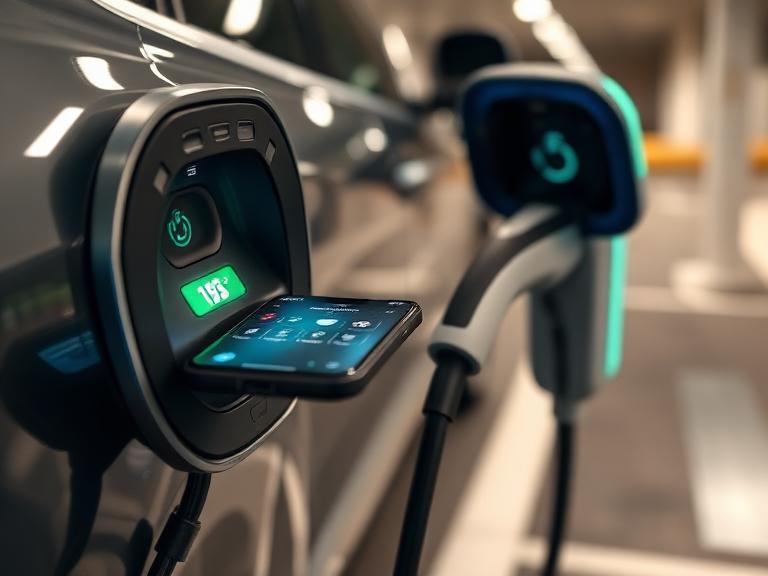
Crucial Hardware Features
- Connector Standard: CCS2 (Combined Charging System 2) is mandatory for passenger cars and light commercial vehicles across India.
- Weather Protection & Cooling: Outdoor chargers must have an IP54 or IP65 enclosure rating with forced-air or liquid cooling systems to operate reliably during hot Hyderabad summers.
- Cable & Ergonomics: Cables should be at least 5 meters long and feature retractor systems to keep plugs clean and easy to handle.
- Display & Payments: Integrated touchscreen displays (7-inch to 15-inch) with multilingual support (Telugu, English, Hindi), QR code display, and RFID card scanners.
Upstream Electrical Equipment Requirements
- Transformer: 250 kVA or 500 kVA, 11kV/415V step-down transformer (oil-cooled or dry-type).
- Switchgear & Panels: Main LT Panel with Moulded Case Circuit Breakers (MCCB), Earth Leakage Circuit Breakers (ELCB), and Type 2 Surge Protection Devices (SPD).
- Earthing System: Dedicated chemical earthing pits for charger neutral, body, and transformer structure to keep earth resistance below 1 Ohm.
Step-by-Step Implementation Roadmap
+---------------------------------------------------------------------------------+
|                  PROJECT EXECUTION TIMELINE IN HYDERABAD (10 WEEKS)            |
+---------------------------------------------------------------------------------+
| Weeks 1-2  | Site Selection, Land Lease, Feasibility & Power Load Audit         |
| Weeks 3-4  | TGREDCO Application & TGSPDCL Grid Connection Filing               |
| Weeks 5-6  | Civil Work: Parking Bays, Transformer Pad, Lighting Canopy        |
| Weeks 7-8  | Procurement: DC Charger Hardware, Cables, Distribution Panels     |
| Week 9     | Transformer Erection, Electrical Wiring & CEIG Safety Inspection   |
| Week 10    | CMS Software Setup, Network Testing, Payment Gateway & Launch      |
+---------------------------------------------------------------------------------+
1.Site Selection and Legal Due Diligence:Weeks 1 to 2.
Select a location with high visibility, easy ingress/egress, and nearby 11kV grid access. Secure land lease or revenue-share agreements with property owners.
2.TGREDCO Registration and DISCOM Application:Weeks 3 to 4.
Submit site plans through the TGREDCO single-window portal. Apply for an EV power connection under Category LT-IX or HT-IX with TGSPDCL.
3.Civil Infrastructure & Transformer Installation:Weeks 5 to 6.
Construct reinforced concrete parking bays, transformer pads, protective canopies, drainage channels, and lighting systems.
4.Equipment Procurement & Electrical Setup:Weeks 7 to 9.
Procure ARAI/ICAT-certified dual-gun DC chargers and upstream electrical hardware. Complete wiring, switchgear installation, and chemical earthing pits. Pass the Chief Electrical Inspectorate to Government (CEIG) safety audit.
5.CMS Integration, Testing, and Public Opening:Week 10.
Connect chargers to OCPP-compliant Charger Management Software (CMS). Test live vehicle charging, verify payment processing, list the site on map aggregators, and open for public operation.
Business Models & Financial Projections
A commercial DC fast charger setup in Hyderabad can be executed under three main operating models:
1. CAPEX Model (Owner-Operated)
The investor owns the hardware, civil work, and power infrastructure outright.
- Pros: Keeps 100% of profit margins per kWh sold; full operational control.
- Cons: Higher upfront capital requirements and ongoing management duties.
2. OPEX / Franchisee Model (CPO Partnership)
A Charge Point Operator provides the DC fast chargers and software, while the site host supplies land and grid connections.
- Pros: Lower initial capital outlay; marketing, software, and maintenance are handled by the CPO.
- Cons: Revenue is shared via fixed per-kWh payouts or percentage splits.
3. Land Lease Model
The landowner leases high-traffic commercial land to CPOs under long-term leases (10 to 15 years).
- Pros: Zero risk or hardware cost; provides steady monthly rental income.
- Cons: Capped income potential compared to direct charger ownership.
Financial Breakdown: 60kW Dual-Gun Commercial Setup
Below is a 5-year CAPEX and OPEX financial model for a standard commercial station in Hyderabad equipped with One 60 kW Dual-Gun CCS2 DC Fast Charger.
+---------------------------------------------------------------------------------+
|              CAPEX & FINANCIAL SUMMARY (60 kW DUAL-GUN SETUP)                   |
+---------------------------------------------------------------------------------+
| CAPITAL EXPENDITURE (CAPEX)                                                     |
|  - 60kW Dual Gun CCS2 DC Charger Hardware:            ₹ 7,00,000  |
|  - 100 kVA Transformer & Switchgear Panel:            ₹ 3,50,000                |
|  - TGSPDCL Connection & Security Deposit:             ₹ 2,00,000                |
|  - Civil Bays, Canopy, Lighting & Signage:            ₹ 2,00,000                |
|  - Cabling, Earthing Pits & CEIG Approval:            ₹ 1,00,000                |
|---------------------------------------------------------------------------------|
| TOTAL INITIAL CAPEX INVESTMENT:                       ₹15,50,000  |
+---------------------------------------------------------------------------------+
Capital Expenditure (CAPEX)
- 60 kW Dual-Gun DC Fast Charger Unit: ₹7,00,000
- 100 kVA Step-Down Transformer & Panel: ₹3,50,000
- TGSPDCL Grid Connection & Security Deposit: ₹2,00,000
- Civil Works, Canopy, Paving & Signage: ₹2,00,000
- Armored Cabling, Earthing Pits & CEIG Approvals: ₹1,00,000
- Gross CAPEX: ₹15,50,000
- Less PM E-Drive Upstream Infrastructure Subsidy Benefit: (-₹2,50,000)
- Net Outlay CAPEX: ₹13,00,000
Operating Assumptions & Unit Economics
| Metric / Parameter | Estimated Value |
| Operating Hours | 18 Hours / Day |
| Projected Charger Utilization Rate | 30% Capacity Factor (~18 kWh/hr average = 324 kWh/day) |
| Average Power Cost (TGSPDCL ToD Weighted) | ₹6.10 / kWh |
| Customer Billed Price | ₹18.00 / kWh |
| Gross Margin per kWh | ₹11.90 / kWh |
| Monthly Fixed Demand Charges | ₹10,000 (100 kVA @ ₹100/kVA) |
| Monthly Software CMS & Network Fees | ₹3,000 |
| Monthly Maintenance & Cleaning Overhead | ₹7,000 |
Monthly Income Statement
- Total Monthly Electricity Sold: 324 kWh/day x 30 days = 9,720 kWh
- Gross Billed Monthly Revenue: 9,720 kWh x ₹18.00 = ₹1,74,960
- Electricity Bill (TGSPDCL Power Cost): 9,720 kWh x ₹6.10 = ₹59,292
- Fixed Demand Charges: ₹10,000
- Gross Operating Surplus: ₹1,05,668
- Less Monthly Overhead Expenses (CMS, Maintenance, Security): (-₹10,000)
- Net Monthly Operating Profit (EBITDA): ₹95,668
- Annual Net Operating Profit: ₹11,48,016
Payback Period Calculation
$$\text{Simple Payback Period} = \frac{\text{Net CAPEX Outlay}}{\text{Annual Net Cash Flow}} = \frac{₹13,00,000}{₹11,48,016} \approx \mathbf{1.13\text{ Years}}$$
Even with conservative urban utilization rates of 20%, payback is typically achieved within 2.2 to 2.8 years. Adding complementary retail options (e.g., coffee shops, automated kiosks, car washes) can boost revenue further.
Software, CMS & Smart Grid Integration
Running a commercial DC fast charger requires management software to monitor station performance, manage billing, and ensure high operational uptime.
+---------------------------------------------------------------------------------+
|                  CMS ARCHITECTURE & ECOSYSTEM CONNECTIVITY                      |
+---------------------------------------------------------------------------------+
|                                                                                 |
|  +-----------------------+  OCPP 1.6J / 2.0.1   +--------------------------+  |
|  | HARDWARE DC CHARGER   | <------------------> | CENTRAL CMS PLATFORM     |  |
|  | 60kW / 120kW Fast Unit|   JSON WebSocket     | Monitoring & Auto-Reset  |  |
|  +-----------------------+                      +--------------------------+  |
|                                                              |                  |
|        +-----------------------------------------------------+                  |
|        |                                                                        |
|        v                                                                        |
|  +-----------------------+  +-----------------------+   +--------------------+  |
|  | EV DRIVER MOBILE APP  |  | DIGITAL PAYMENTS      |   | MAP AGGREGATORS    |  |
|  | iOS & Android Apps    |  | UPI, Cards, RFID      |   | Google Maps, Apps  |  |
|  +-----------------------+  +-----------------------+   +--------------------+  |
+---------------------------------------------------------------------------------+
Key CMS Features for Commercial Stations
- OCPP Protocol Support: Chargers must support OCPP 1.6J or OCPP 2.0.1 to connect with third-party networks and avoid proprietary vendor lock-in.
- Automated Payment Gateways: Direct support for UPI, credit/debit cards, net banking, RFID fleet cards, and mobile wallets.
- Dynamic Load Management (DLM): Adjusts output power automatically when multiple vehicles are plugged in, preventing grid demand from exceeding sanctioned transformer limits.
- Auto-Fault Diagnosis: Monitors cable temperatures, grid voltage levels, and connector locks in real time, enabling remote system resets to maintain station uptime.
- Aggregator Integration: Publishes live charger availability to navigation platforms (Google Maps, PlugShare, Tata Power EZ Charge, Pulse Energy) to guide drivers to the station.
Safety Compliance, Operation & Maintenance
Commercial DC fast chargers handle high electrical currents and require strict adherence to safety standards.
+---------------------------------------------------------------------------------+
|                 SAFETY & PREVENTIVE MAINTENANCE SCHEDULE                        |
+---------------------------------------------------------------------------------+
| SAFETY LAYER      | SAFETY CHECK REQUIREMENT      | INSPECTION FREQUENCY        |
|-------------------+-------------------------------+-----------------------------|
| Electrical Safety | Chemical Earth Pit (<1 Ohm)   | Bi-Annual Testing           |
| Thermal System    | Cable Air/Liquid Cooling      | Monthly Audit               |
| Emergency Stop    | Hard Cut-Off Button Test      | Weekly Check                |
| Surge Protection  | Type-2 SPD & Isolation MCCB   | Monthly / Post-Storm Inspection|
| Physical Site     | Lighting, CCTV, Waterproofing | Daily Operations            |
+---------------------------------------------------------------------------------+
Key Safety Requirements
- Emergency Power Cut-Off: Chargers must feature an easily accessible, physical red emergency stop button.
- Surge & Isolation Protection: Built-in isolation transformers and surge protection devices (SPD) protect vehicle battery management systems (BMS) from voltage spikes.
- Temperature Safety: Temperature sensors inside CCS2 guns automatically reduce charging speed or shut off power if connector temperatures exceed 80°C.
- Site Security: Install LED floodlighting, 24/7 CCTV cameras, and weather-proof canopies to protect users during nighttime charging sessions.
Aggregated Commercial DC Charging Registry in Hyderabad
Below is an aggregated directory of representative commercial public DC fast-charging hubs across Hyderabad:
| Station ID | Location / Commercial Cluster | Capacity | Connectors | Site Amenities |
| TG-HYD-GAC-01 | Financial District, Gachibowli | 120 kW Dual DC | Dual CCS2 | Work Lounges, Coffee Kiosk, 24/7 Security |
| TG-HYD-BAN-02 | Road No. 12, Banjara Hills | 60 kW Dual DC | Dual CCS2 | Retail Mall Parking, Valet, Restrooms |
| TG-HYD-LBN-03 | LB Nagar ORR Junction | 180 kW Multi-Gun | Triple CCS2 | Fast Food Diner, Fleet Bay, Solar Canopy |
| TG-HYD-KUK-04 | KPHB Phase 3, Kukatpally | 60 kW Dual DC | Dual CCS2 | Metro Access, Supermarket, Waiting Area |
| TG-HYD-SEC-05 | Paradise Circle, Secunderabad | 120 kW Dual DC | Dual CCS2 | Transit Hub Parking, Cafe, CCTV |
Frequently Asked Questions (FAQs)
1. What is the commercial electricity tariff rate for EV charging in Hyderabad?
The Telangana Electricity Regulatory Commission (TGERC) sets a base rate of ₹6.00 to ₹6.04 per kWh for public EV charging stations. Under the Time-of-Day (ToD) system, rates are ₹5/kWh during off-peak night hours (10 PM–6 AM), ₹6/kWh during normal daytime hours, and ₹7/kWh during peak hours (6 AM–10 AM & 6 PM–10 PM).
2. Who is the nodal agency for setting up a DC fast charger in Hyderabad?
The Telangana Renewable Energy Development Corporation Limited (TGREDCO) serves as the State Nodal Agency (SNA) managing approvals, site empanelment, single-window clearances, and PM E-Drive subsidies.
3. Which DISCOM supplies power for commercial EV chargers in Hyderabad?
The Telangana Southern Power Distribution Company Limited (TGSPDCL) provides power connections across Hyderabad, Secunderabad, Rangareddy, and Medchal-Malkajgiri.
4. How much total space is required for a commercial 60kW DC fast charging station in Hyderabad?
A dual-gun 60kW DC fast charger setup requires roughly 650 to 1,200 square feet to accommodate two parking bays, the charger unit, transformer infrastructure, and vehicle access.
5. What is the total capital expenditure (CAPEX) to set up a 60kW DC fast charger in Hyderabad?
Setting up a 60kW dual-gun DC fast charger costs approximately ₹15 Lakhs to ₹18 Lakhs total—around ₹7 Lakhs for the charger unit and ₹7 Lakhs to ₹8 Lakhs for upstream infrastructure (transformer, cables, switchgear, civil work, and TGSPDCL grid connection).
6. Are subsidies available for commercial EV charger setups in Hyderabad?
Yes. Under the central government’s PM E-Drive program, managed locally by TGREDCO, eligible public charging setups can receive up to 80% subsidies on upstream power infrastructure (transformers, switchgear, cabling).
7. Does a commercial EV fast charger operator need a license to sell electricity in Hyderabad?
No. Under Ministry of Power and Government of Telangana regulations, EV charging is classified as a Service Delivery rather than the resale of electricity, so no distribution license is required.
8. What fast-charging connector standard is required for commercial passenger EVs in Hyderabad?
The Combined Charging System 2 (CCS2) standard is mandatory for passenger cars, electric cabs, and light commercial vehicles operating in India.
9. How long does it take to secure an HT/LT EV connection from TGSPDCL?
Through single-window processing, acquiring an EV power connection from TGSPDCL takes about 30 to 45 business days following civil preparation and CEIG safety clearance.
10. What is the payback period for a commercial DC fast charging station in Hyderabad?
Driven by high utilization from rideshare cabs, delivery fleets, and personal EVs, the typical payback period ranges between 2.1 and 3.2 years.
11. Which areas in Hyderabad offer the highest profitability for DC fast chargers?
Top locations include HITEC City, Gachibowli Financial District, Jubilee Hills, Banjara Hills, LB Nagar, Secunderabad, and Outer Ring Road (ORR) exit interchanges.
12. What is the difference between LT and HT power connections for DC fast chargers in Hyderabad?
Low Tension (LT-IX – 415V) connections suit single fast chargers up to 50kW–60kW. High Tension (HT-IX – 11kV) connections are required for loads exceeding 70kW–100kW, such as multi-charger hubs or 120kW+ units requiring an on-site step-down transformer.
13. Can I install a commercial DC fast charger inside a commercial mall or IT park in Hyderabad?
Yes. Commercial complexes, shopping malls, and IT parks frequently host fast chargers under Revenue-Sharing or Fixed Lease arrangements to attract EV drivers.
14. What software protocol must a commercial DC fast charger use?
Chargers must support OCPP 1.6J or OCPP 2.0.1 to connect with Charger Management Systems (CMS) for billing, live map tracking, payment handling, and remote monitoring.
15. How does Telangana’s EV tax exemption impact charging demand in Hyderabad?
Telangana’s 100% road tax and registration fee waiver through December 31, 2026, has accelerated EV adoption across electric cabs, personal cars, and delivery fleets in Hyderabad, increasing daily demand for public DC fast charging.