Table of Contents
Yoga Training for Beginners in Chennai | 2026 Guide & Studios
Chennai holds a sacred, unmatched position in the global history of mind-body wellness. As the cradle of classical teaching traditions—from the individualized, therapeutic Viniyoga lineage of Yogacharya T. Krishnamacharya to the structured Hatha practices of Sivananda Yoga and the global outreach of Asana Andiappan—the city is a living classroom. For an absolute beginner, taking those first steps onto a yoga mat in Chennai means connecting with centuries of authentic knowledge preserved by master teachers and modern biomechanical experts alike.
In a fast-paced coastal metropolis where long hours along the IT corridors of OMR, heavy traffic commutes across Kathipara Junction, and high-stress corporate environments are the norm, initiating yoga training for beginners in Chennai is one of the most effective health decisions you can make.
However, entering a yoga studio for the first time can feel overwhelming. Questions naturally arise: Am I flexible enough? Which style should I start with? How do I choose between an indoor studio in Alwarpet, a sunrise beach batch in Besant Nagar, or a private home trainer? What are the standard fees across Chennai in 2026?
This comprehensive guide answers every question. Designed specifically for absolute novices, working professionals, homemakers, and seniors, this manual covers the physiological adaptations of beginner training, core curriculum pillars, neighborhood studio breakdowns, cost analysis, climate modifications, and a 15-question FAQ section.
1. The Anatomy of a Beginner: What Happens When You Start Training?
When an absolute beginner begins structured yoga training, the body does not simply “stretch”—it undergoes a profound series of neurological, connective tissue, and respiratory adaptations. Beginner yoga training is fundamentally a systematic re-education of the central nervous system.
                  [Neuromuscular Adaptation Loop for Beginners]
                                        │
     ┌──────────────────────────────────┼──────────────────────────────────┐
     ▼                                  ▼                                  ▼
Neuromuscular De-guarding      Fascial Re-Hydration & Mobility    Diaphragmatic Re-patterning
(Weeks 1–2: Reduced tension)   (Weeks 3–4: Tissue lengthening)    (Weeks 5–8: Vagal stimulation)
1. Neuromuscular De-guarding (Weeks 1 to 2)
Stiffness in beginners is rarely caused solely by short muscle fibers; it is primarily an involuntary protective reflex governed by the brain, known as “muscle guarding.” When you try to touch your toes without proper warm-up, your muscle spindles send threat signals to the spinal cord, causing hamstrings and lower back muscles to contract defensively.
Foundational yoga training uses slow, static holds synchronized with deep exhalations to bypass the stretch reflex. This signals safety to the central nervous system, allowing involuntary muscular guarding to release naturally.
2. Fascial Re-hydration and Connective Tissue Lengthening (Weeks 3 to 4)
Muscles are wrapped in a continuous web of connective tissue called fascia. In sedentary desk workers, fascia becomes dehydrated, sticky, and adhered, restricting joint movement. Gentle, multi-directional foundational movements (Sukshma Vyayama) circulate fluid through fascial layers, restoring natural elastic glide and joint range without micro-tears.
3. Diaphragmatic Re-patterning (Weeks 5 to 8)
Due to prolonged sitting and chronic workplace stress, most urban adults develop shallow, rapid “chest-breathing” patterns. Beginner training retrains the primary respiratory muscle—the diaphragm. Deep abdominal inhalation expands the lower lungs, stimulating the vagus nerve and shifting the body out of sympathetic “fight-or-flight” mode into parasympathetic recovery.
2. The Four Core Pillars of a Beginner Yoga Training Curriculum
A authentic, safety-first beginner program never throws a novice into fast-paced dynamic sequences or complex inversions on day one. Instead, it breaks down the practice into four foundational, easy-to-digest pillars:
                      [4-Pillar Beginner Curriculum]
                                    │
     ┌──────────────────────────────┼──────────────────────────────┐
     ▼                              ▼                              ▼
Pillar 1: Sukshma Vyayama      Pillar 2: Asana Alignment       Pillar 3: Pranayama & Rest
(Joint Mobilization)           (Foundational Postures)         (Breath & Systemic Recovery)
  • Neck & shoulder rolls        • Tadasana (Mountain Pose)      • Diaphragmatic Breathing
  • Ankle & wrist flexions       • Modified Trikonasana          • Guided Savasana
Pillar 1: Micro-Movements (Sukshma Vyayama)
Systematic, isolated joint mobilizations that warm up synovial fluid in the wrists, neck, shoulders, hips, knees, and ankles before applying weight-bearing loads. This step is critical for preventing joint strain in stiff beginners.
Pillar 2: Foundational Posture Mechanics (Asana Alignment)
Learning the geometry, weight distribution, and engagement points of foundational standing, seated, and supine postures. Key poses include:
- Tadasana (Mountain Pose): Establishes correct posture, spinal elongation, and ground-up balance.
- Trikonasana (Triangle Pose – Modified): Opens tight hips and stretches hamstrings while keeping the spine elongated using yoga blocks.
- Bhujangasana (Cobra Pose – Gentle): Strengthens weak upper back extensors to counteract desk-slump without compressing the lower lumbar vertebrae.
Pillar 3: Breath Integration (Pranayama)
Learning conscious breath control separate from and integrated with physical movement. Beginners start with Anulom Vilom (Alternate Nostril Breathing) and Diaphragmatic Awareness to build lung capacity and emotional balance.
Pillar 4: Conscious Relaxation (Savasana & Yoga Nidra)
Training the body and mind to completely let go of tension at the end of every practice session. This phase lowers blood pressure, clears metabolic waste from muscles, and consolidates motor learning.
3. Comparing Yoga Training Styles for Beginners
Not all yoga styles are suited for someone stepping onto the mat for the first time. Selecting a style that aligns with your current flexibility, age, and health condition ensures a rewarding, injury-free experience.
| Yoga Style | Movement Pace | Physical Demands | Prop Usage | Best Suited For |
| Classical Hatha Yoga | Slow to Moderate; static holds | Moderate strength; gentle stretching | Optional (Blocks/Straps) | Absolute beginners, general fitness, stress reduction |
| Viniyoga (Therapeutic) | Breath-synchronized; customized | Low to Moderate; modified angles | High (Chair, Wall, Bolster) | Stiff individuals, back pain sufferers, seniors, injury recovery |
| Sivananda Yoga | Methodical, fixed 12-pose flow | Moderate stamina | Low | Beginners seeking a structured, predictable routine with chanting & rest |
| Iyengar Yoga | Slow; intense precision focus | Moderate isometric holds | Very High (Blocks, Belts, Ropes) | Detail-oriented beginners, posture correction, joint alignment |
| Power Vinyasa Flow | Fast, continuous flow | High strength & cardiovascular demand | Low | Active individuals, athletes (Not recommended for complete novices) |
4. Neighborhood Guide: Top Beginner Training Hubs in Chennai
Choosing a training location within a short, low-stress commute is essential for keeping up a regular daily or weekly habit. Chennai offers diverse, high-quality yoga ecosystems across its primary residential and commercial zones:
                        [Chennai Regional Yoga Ecosystem]
                                        │
     ┌──────────────────────────────────┼──────────────────────────────────┐
     ▼                                  ▼                                  ▼
Central Heritage Hubs              South & Coastal Sanctuaries        North & Western Growth Nodes
(Mylapore, Mandaveli, T. Nagar)    (Adyar, Besant Nagar, ECR)         (Anna Nagar, Kilpauk, Porur)
  • Lineage-backed institutes        • Sunrise beach groups             • Modern AC studios
  • 1-on-1 therapeutic assessments   • Open-air coastal pavilions       • Corporate shift-friendly slots
1. Central Heritage Hubs (Mylapore, Mandaveli, Alwarpet & T. Nagar)
The cultural heart of Chennai yoga. Home to renowned institutions like the Krishnamacharya Yoga Mandiram (KYM) and established heritage centers.
- Training Vibe: Traditional, academic, deeply therapeutic, and individual-focused.
- Why Beginners Thrive Here: Instructors conduct thorough initial health assessments before assigning custom posture modifications, making these centers ideal for those managing back pain, hypertension, or joint stiffness.
2. South & Coastal Sanctuaries (Adyar, Besant Nagar, Thiruvanmiyur & ECR)
Capitalizing on fresh coastal sea breezes along the Bay of Bengal.
- Training Vibe: Refreshing, eco-conscious, community-driven, and open-air.
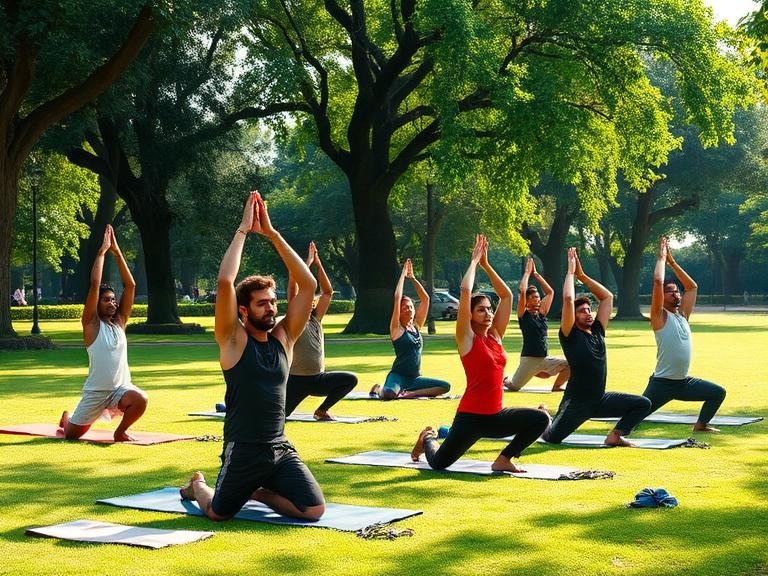
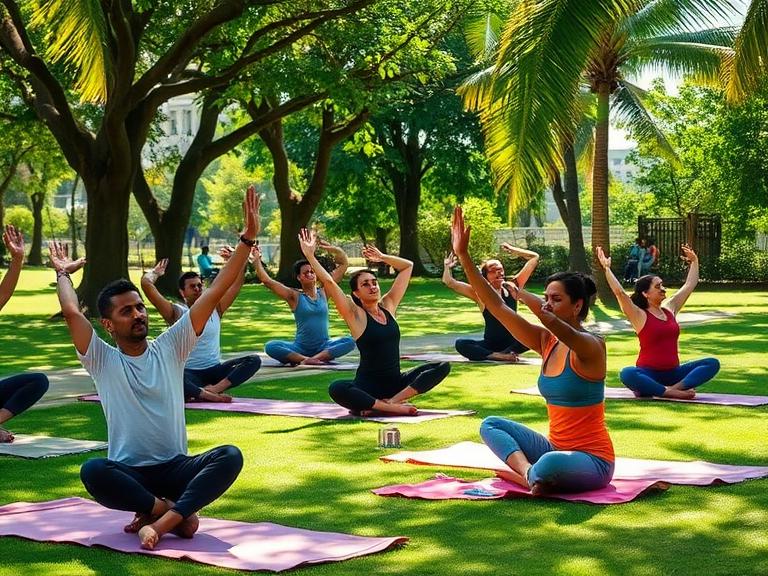
- Why Beginners Thrive Here: Joining early morning sunrise beach batches along Elliot’s Beach or Thiruvanmiyur provides natural ventilation rich in negative ions. The relaxed outdoor environment removes any pressure of “performing” poses perfectly.
3. North & Western Growth Nodes (Anna Nagar, Kilpauk, Porur & Velachery)
Rapidly expanding residential and commercial centers.
- Training Vibe: Modern, well-equipped, air-conditioned, and structured.
- Why Beginners Thrive Here: Boutique studios along these corridors cater heavily to corporate professionals, IT employees, and families. Small class sizes (typically 8 to 12 students) ensure instructors can give personal alignment corrections.
5. Step-by-Step Onboarding Roadmap for Beginners
Starting your yoga journey is simple when you follow a clear, step-by-step plan:
1.Step 1: Conduct a Personal Health & Mobility Audit:Phase 1: Readiness Audit.
Identify any current physical constraints—such as tight hamstrings, chronic lower back stiffness, neck pain, or high blood pressure. Share these details with your trainer prior to your first session so they can prepare safe pose variations.
2.Step 2: Enroll Specifically in a Foundations Batch:Phase 2: Format Selection.
Avoid enrolling in open, mixed-level, or fast-paced Vinyasa flow batches during your first month. Select programs explicitly labeled “Foundations,” “Beginner Hatha,” “Gentle Yoga,” or “Level 1.”
3.Step 3: Assemble Simple, Supportive Props:Phase 3: Gear Setup.
Invest in a high-grip 5mm–6mm non-slip yoga mat, two high-density foam blocks, and an 8-foot cotton yoga strap. Props bring the floor closer to you, preventing back strain as you gradually build flexibility.
4.Step 4: Commit to 3 Fixed Days Per Week:Phase 4: Habit Anchor.
Schedule 3 training sessions per week on alternating days (e.g., Monday, Wednesday, Friday). This rhythm allows your neuromuscular system to build muscle memory while giving joints rest days to adapt.
5.Step 5: Evaluate Postural Form & Comfort:Phase 5: Progression Review.
After 4 to 6 weeks of consistent attendance, review your form mechanics, breath control, and joint comfort with your trainer before transitioning to intermediate general classes.
6. Detailed Cost Analysis & Pricing Structure in Chennai (2026 Rates)
Understanding standard market rates helps you choose an option that fits your budget. Yoga training fees in Chennai vary based on format (indoor studio vs. outdoor beach vs. private home tutor), location overheads, and teacher experience.
| Training Format | Average Monthly Investment (2026) | Per Session Rate | Value Highlights |
| Outdoor Beach / Park Group Batches | ₹1,500 – ₹3,600 / month | ₹150 – ₹300 / class | Highly affordable, fresh sea air, strong community vibe |
| Indoor Studio Group Classes | ₹2,500 – ₹4,800 / month | ₹300 – ₹500 / class | Climate control, prop availability, structured curriculum |
| Boutique AC Studios (Small Batches) | ₹4,500 – ₹7,000 / month | ₹500 – ₹800 / class | Small batch sizes (under 10), premium equipment, locker amenities |
| 1-on-1 Personal Home Trainers | ₹8,000 – ₹15,000 / month | ₹800 – ₹1,500 / class | Complete privacy, home convenience, 100% customized rehabilitation |
| Live Interactive Online Batches | ₹1,200 – ₹3,000 / month | ₹100 – ₹250 / class | Zero commute friction, practice comfortably from home |
Financial Tip for Beginners: Over 80% of registered studios and independent trainers across Chennai offer free or low-cost demo trial classes. Take advantage of a trial session to evaluate the instructor’s communication, class pacing, and facility hygiene before committing to a multi-month package.
7. Adapting Beginner Training to Chennai’s Climate & Work Culture
A sustainable yoga routine must account for local weather patterns and workplace demands. Trying to perform the exact same energetic routine year-round without seasonal adjustments can lead to fatigue or dropped habits.
┌────────────────────────────────────────────────────────────────────────┐
│                   SEASONAL YOGA ADAPTATION MATRIX                      │
├──────────────────┬──────────────────────┬──────────────────────────────┤
│ Season           │ Environmental Shift  │ Beginner Practice Strategy   │
├──────────────────┬──────────────────────┬──────────────────────────────┤
│ Summer           │ Intense heat (38°C+) │ • Practice early (5:30–6:45 AM).│
│ (April – June)   │ & elevated humidity  │ • Slow down dynamic movements.│
│                  │                      │ • Add Sheetali cooling breath.│
├──────────────────┬──────────────────────┬──────────────────────────────┤
│ Monsoon          │ High dampness &      │ • Focus on indoor warmth.    │
│ (October – Dec)  │ joint stiffness      │ • Perform gentle warming     │
│                  │                      │   Sun Salutations & twists.  │
├──────────────────┬──────────────────────┬──────────────────────────────┤
│ Cooler Months    │ Comfortable breezes &│ • Ideal time for outdoor     │
│ (Jan – March)    │ peak energy levels   │   beach practice & balances. │
└──────────────────┴──────────────────────┴──────────────────────────────┘
1. Beating the Coastal Heat (Summer Protocol)
During Chennai’s hot summer months, dynamic high-speed sequences can generate excessive internal heat (Pitta imbalance). Shift practice strictly to early morning hours (5:30 AM to 6:45 AM). Slow down transition speeds between poses and conclude every session with cooling breathwork—such as Sheetali (cooling tongue breath) or Sitkari (hissing breath)—to lower internal body temperature naturally.
2. Desk-Worker Syndrome (IT Corridor Protocol)
For IT professionals sitting for 8 to 10 hours daily along OMR or Guindy, beginner training should focus heavily on reversing desk posture. Key target areas include stretching tight hip flexors (Psoas), opening the chest (Pectoralis minor), decompressing the lumbar spine, and re-engaging inactive glute muscles.
8. Frequently Asked Questions (15 Detailed FAQs)
Q1: I am completely inflexible and cannot touch my toes. Can I still join yoga training for beginners in Chennai?
Yes, absolutely! Inflexibility is a primary reason to start yoga training, not a barrier. Beginner training focuses on gentle, step-by-step movement, using yoga blocks, cotton straps, and bolsters to modify poses so you build flexibility safely over time without strain.
Q2: What is the average monthly cost of beginner yoga training in Chennai in 2026?
Group studio classes for beginners typically cost between ₹2,500 and ₹4,800 per month for 3 to 5 sessions a week. Outdoor beach batches range from ₹1,500 to ₹3,600 per month, while private 1-on-1 home tutors charge ₹8,000 to ₹15,000 per month.
Q3: Which style of yoga training is safest and best for an absolute beginner in Chennai?
Classical Hatha Yoga and Sivananda Yoga are generally considered the safest and most structured styles for absolute beginners. If you are dealing with stiffness, back pain, or joint issues, Viniyoga or Iyengar Yoga with props provides personalized alignment and therapeutic care.
Q4: How many times a week should a beginner attend yoga training sessions?
Attending 3 sessions per week (on alternating days like Monday, Wednesday, and Friday) is ideal for beginners. This frequency provides enough repetition for your neuromuscular system to build muscle memory while giving joints and tissues rest days to adapt.
Q5: Should I choose indoor studio training or outdoor beach yoga as a beginner in Chennai?
Indoor studios are better if you prefer air-conditioned or quiet, distraction-free environments with access to props and individual alignment corrections. Outdoor beach yoga (at Besant Nagar or Thiruvanmiyur) is great if you enjoy natural sea air, open space, and budget-friendly community groups.
Q6: What should I wear to my first beginner yoga training session in Chennai?
Wear breathable, lightweight, and stretchable cotton athletic clothing such as track pants, leggings, or loose-fitting cotton T-shirts. Avoid rigid jeans, heavy synthetic materials, or excessively loose tops that could slip over your head during forward bends.
Q7: Is it better for a beginner to hire a personal yoga trainer at home or join a group studio batch?
If you have pre-existing medical conditions, severe spinal issues, or strict work schedules, a personal 1-on-1 home trainer is ideal. If you are generally healthy and want to learn in an encouraging social environment at a lower cost, a studio group class is best.
Q8: Do I need to buy my own yoga mat before attending my first trial class in Chennai?
While many Chennai studios provide complimentary mats for demo sessions, it is strongly recommended to purchase your own 5mm to 6mm non-slip PVC, TPE, or cotton yoga mat for hygiene and comfort.
Q9: Can senior citizens in Chennai start learning yoga as total beginners?
Yes! Many institutes in Chennai offer dedicated Gentle Yoga or Chair Yoga programs for seniors. These classes emphasize joint lubrication (Sukshma Vyayama), balance improvement, light stretching, and deep breathing without pressure on the knees.
Q10: How long does it take for a beginner to notice physical and mental results from yoga training?
Most beginners report improved sleep quality, reduced mental anxiety, and smoother digestion within 2 to 3 weeks of consistent practice. Physical changes like enhanced flexibility, posture alignment, and core strength usually become noticeable within 6 to 8 weeks.
Q11: Can I eat breakfast before attending a morning yoga training class in Chennai?
No. Yoga should always be practiced on an empty stomach. Wait at least 2.5 to 3 hours after a main meal, or 30 minutes after a light drink like warm lemon water or green tea, before starting your practice.
Q12: Which localities in Chennai have the highest concentration of beginner-friendly yoga centers?
Mylapore, Mandaveli, Adyar, Besant Nagar, Alwarpet, T. Nagar, Anna Nagar, and Velachery have a high density of established yoga centers, lineage institutions, and boutique wellness studios catering specifically to beginners.
Q13: Are trial or demo classes available for beginner yoga training in Chennai?
Yes, over 80% of yoga studios and private trainers in Chennai offer a free or low-cost trial session so beginners can experience the teaching style, environment, and batch timing before enrolling.
Q14: Can beginner yoga training help reduce stress caused by corporate work in Chennai IT hubs?
Yes, beginner yoga training specifically targets stress reduction by combining physical posture releases (opening tight shoulders and hips) with regulated diaphragmatic breathing (Pranayama) and systematic relaxation (Savasana), which lowers cortisol levels.
Q15: What is the best time of day to practice yoga for beginners in Chennai given the warm climate?
The ideal time is early morning between 5:30 AM and 7:00 AM, when temperatures are coolest and ambient air quality is at its cleanest. Late afternoon or early evening sessions between 5:30 PM and 7:00 PM are also effective if practiced in well-ventilated spaces.