Table of Contents
EV Charging Station Contractor Hyderabad: EPC, Turnkey Setup & Technical Guide
Deploying robust electric vehicle charging infrastructure requires specialized engineering, procurement, and construction (EPC) expertise. Engaging an experienced EV charging station contractor in Hyderabad ensures that your commercial, fleet, or residential setup meets strict electrical safety standards, local DISCOM grid requirements, and state government compliance guidelines.
Operating in Greater Hyderabad presents unique structural and technical demands. From navigating power load approvals with TSSPDCL (Southern Power Distribution Company of Telangana Limited) to engineered transformer sizing and civil layout design, turnkey EPC contractors manage the entire project lifecycle.
Whether you are a real estate developer installing AC wallboxes across gated communities in Kondapur, an enterprise deploying DC fast depots for commercial fleets in Shamshabad, or a landowner establishing a highway charging hub along the Outer Ring Road (ORR), this guide outlines contractor selection, turnkey engineering processes, installation costs, and regulatory clearances across Telangana.
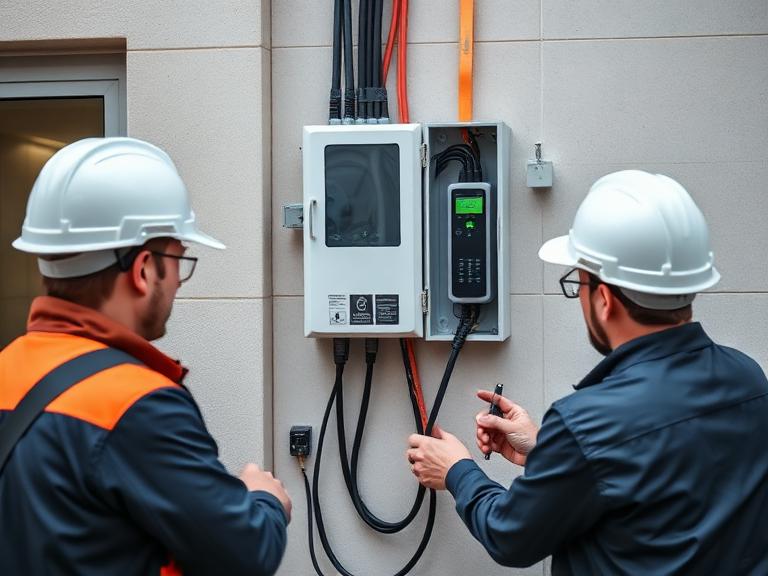
1. What Does an EV Charging Station Contractor Do?
An EV charging station contractor acts as a single-point Turnkey EPC (Engineering, Procurement, and Construction) partner. Rather than hiring separate electrical contractors, civil engineers, CPO software vendors, and liaison agents, a dedicated contractor handles end-to-end execution.
                     [ TURNKEY EPC CONTRACTOR SCOPE ]
                                     │
         ┌───────────────────────────┼───────────────────────────┐
         ▼                           ▼                           ▼
[ 1. Engineering & Site ]   [ 2. Procurement & Civil ]  [ 3. Liaison & Go-Live ]
• Load Feasibility Study    • Charger Hardware Sourcing • TSSPDCL Load Sanctions
• Transformer / HT Sizing   • Trenching & Cabling       • CEIG Safety Clearances
• Electrical Panel Design   • Canopy & Pad Civil Works  • CMS / OCPP Integration
Core Contractor Responsibilities
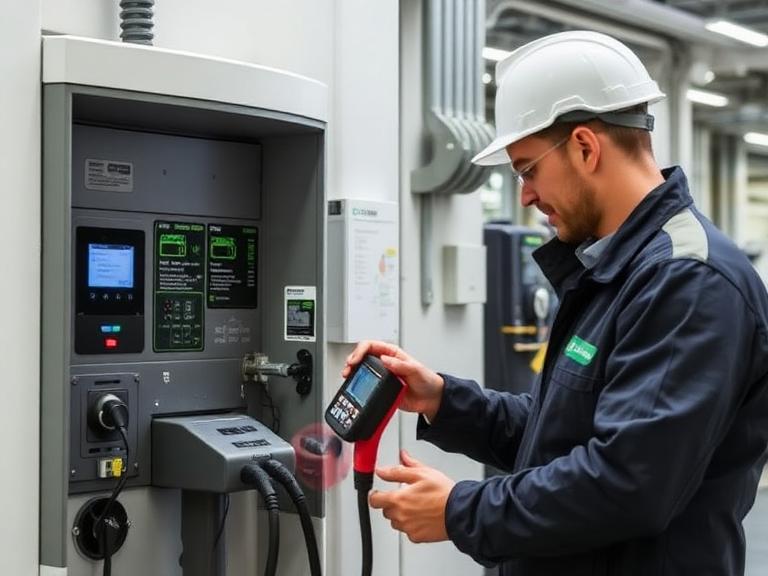
- Feasibility & Electrical Site Audits: Assessing existing building electrical panels, measuring grid stability, and designing transformer capacities based on projected kW/MW load demands.
- Liaison & DISCOM Clearances: Handling formal power sanction applications with TSSPDCL or TGNPDCL, obtaining Chief Electrical Inspectorate to Government (CEIG) approvals, and securing TGREDCO state clearances.
- Procurement & Hardware Supply: Sourcing certified, ARAI/BIS-approved AC wallboxes and high-voltage DC fast chargers (CCS2, Type 2, GB/T) from leading manufacturers.
- Civil & High-Voltage Infrastructure: Executing earth trenching, laying armored XLPE aluminum/copper cabling, installing dedicated step-down transformers, setting up isolation panels, and constructing protective steel canopies.
- Software Integration & Commissioning: Connecting physical hardware to Central Management Systems (CMS) via Open Charge Point Protocol (OCPP) for automated payment gateways, RFID cards, and app telemetry.
2. Key Contractor Workflows: Step-by-Step Implementation
Turnkey EPC contractors in Hyderabad follow a structured engineering workflow to bring a charging hub from concept to commercial operation.
[ Step 1: Initial Technical Feasibility & Traffic Audit ]
                          │
                          ▼
[ Step 2: Electrical Load Sizing & TSSPDCL Application ]
                          │
                          ▼
[ Step 3: Civil Works, Trenching & Transformer Foundation ]
                          │
                          ▼
[ Step 4: High-Voltage Cabling, Panels & Earthing Grid ]
                          │
                          ▼
[ Step 5: Hardware Mounting & CEIG Inspection Audit ]
                          │
                          ▼
[ Step 6: Network Integration, Testing & Commercial Launch ]
Phase 1: Electrical Load Sizing & Grid Feasibility
Before civil work begins, contractors compute total maximum power demand. For instance, installing two 60 kW dual-gun DC chargers alongside two 22 kW AC destination chargers requires a total connected load of 164 kW (approx. 185 kVA).
Contractors submit technical load-sanction files to TSSPDCL, evaluating whether the local feeder line requires a dedicated 11kV High-Tension (HT) consumer connection and a step-down transformer.
Phase 2: Civil Infrastructure & Cable Laying
Heavy-duty DC chargers require reinforced concrete mounting pads capable of supporting equipment weighing over 400 kg. Contractors perform precise underground trenching at a minimum depth of 750 mm, laying armored copper/aluminum XLPE cables through heavy-duty HDPE conduits to protect against soil moisture and physical impact.
Phase 3: Earthing Grid & Electrical Safety Panels
Safety compliance requires dedicated earthing pits. Contractors construct low-resistance chemical earthing grids (maintaining neutral-to-earth resistance under 1.0 Ohm) using copper-bonded earth rods and bentonite compound. Dedicated main distribution panels (LT/HT) are equipped with Surge Protection Devices (SPD), Residual Current Circuit Breakers (RCCB), and Molded Case Circuit Breakers (MCCB) tailored to EV safety norms.
3. Cost Breakdown: Turnkey EPC Projects in Hyderabad
Turnkey project costs vary significantly based on grid distance, transformer requirements, cable run lengths, and charger output capacities.
Itemized Cost Estimate for a 60 kW Dual-Gun DC Fast-Charging Station Hub
| Project Component | Technical Specifications & Scope | Estimated Budget (INR) |
| Charger Hardware | 60 kW DC Dual-Gun Fast Charger (CCS2, OCPP 1.6J, IP54 rated) | ₹7,50,000 – ₹9,80,000 |
| Transformer & HT Substation | 100 kVA 11kV/415V step-down transformer & VCB panel (if required) | ₹3,20,000 – ₹5,50,000 |
| LT Distribution Panel & Safety | Busbars, MCCBs, SPDs, digital meters, energy monitoring unit | ₹1,20,000 – ₹2,20,000 |
| Armored Cabling & Conduits | 3.5 Core 120/185 sq mm XLPE armored aluminum cable (50m run) | ₹85,000 – ₹1,60,000 |
| Civil Foundation & Canopy | Concrete pads, wheel stops, protective steel canopy, bollards, paint | ₹1,10,000 – ₹2,40,000 |
| Chemical Earthing Grid | 4-point chemical earthing pits with copper-bonded electrodes | ₹35,000 – ₹60,000 |
| Statutory Approvals & Fees | TSSPDCL load sanction processing, CEIG inspection fees, liaison | ₹45,000 – ₹85,000 |
| EPC Contractor Labor & Turnkey | Engineering layout, cabling labor, mounting, testing, commissioning | ₹80,000 – ₹1,50,000 |
| Total Estimated EPC Investment | Complete Turnkey Execution (Excluding Land Purchase/Lease) | ₹15,45,000 – ₹24,45,000 |
4. Statutory Clearances & Local Compliance Framework
A commercial EV charging station in Hyderabad must comply with central Ministry of Power guidelines and state-level Telangana utility regulations. A professional contractor manages these statutory applications on your behalf:
+-------------------------------------------------------------------+
|               MANDATORY COMPLIANCE & CLEARANCE MATRIX             |
|                                                                   |
|  ┌──────────────────────┐  ┌──────────────────────┐  ┌──────────┐  |
|  │  TSSPDCL / TGNPDCL   │  │   CEIG INSPECTION    │  │ TGREDCO  │  |
|  │ Dedicated EV Tariff  │  │ Safety Certification │  │ Clearance│  |
|  │ Load Sanction        │  │ High-Voltage Clearance│ │ Registration|
|  └──────────┬───────────┘  └──────────┬───────────┘  └────┬─────┘  |
|             │                         │                   │        |
|             └─────────────────────────┼───────────────────┘        |
|                                       ▼                            |
|                       [ COMMERCIAL GO-LIVE STATUS ]                |
+-------------------------------------------------------------------+
- TSSPDCL Power Connection: Application for a dedicated LT-G or HT-G electric meter under the specialized EV Charging Tariff Category (offering lower per-unit commercial demand charges).
- CEIG (Chief Electrical Inspectorate) Approval: Electrical safety clearance mandatory for all high-voltage installations exceeding 650V or transformer installations over 50 kVA. Inspectors verify earthing resistance values, circuit isolation, and emergency shutdown mechanisms.
- TGREDCO Nodal Registration: Registering the charging infrastructure with the Telangana Renewable Energy Development Corporation to ensure alignment with state public charging network tracking.
- Local Municipal NOC (GHMA / HMDA): Fire safety clearance and commercial site entrance approvals for high-throughput highway plazas and commercial mall basements.
5. Selecting the Right EPC Contractor in Hyderabad: Checklist
Choosing an inexperienced electrical contractor can cause project delays, unsafe cabling execution, and rejected DISCOM load sanctions. Use this technical checklist when evaluating prospective contractors:
========================================================================
                  CONTRACTOR SELECTION EVALUATION MATRIX
========================================================================

  Evaluation Criteria       Key Requirement                     Weight
  -----------------------   ---------------------------------   ------
  1. License Status         Class-A Electrical Contractor License 25%
                            issued by Telangana Government

  2. CPO Network Experience Demonstrated turnkey execution of    25%
                            DC fast chargers (30kW–180kW)

  3. In-House Liaisoning    Dedicated team for TSSPDCL & CEIG   20%
                            clearance management

  4. Warranty & SLAs        Minimum 12-month EPC workmanship    15%
                            guarantee + OEM hardware support

  5. CMS Hardware Agnostic  Ability to deploy open-standard      15%
                            OCPP compliant hardware
- Verify Class-A Electrical Licensing: Ensure the contracting firm holds a valid Class-A Electrical Contractor License authorized by the Telangana State Electricity Licensing Board.
- Assess High-Voltage Experience: Confirm that the contractor has hands-on experience installing heavy DC fast chargers (60 kW–180 kW) and transformers, rather than just basic residential building wiring.
- Check OCPP Software Agnosticism: Avoid contractors who lock you into single proprietary software stacks unless desired. A qualified contractor installs open OCPP 1.6J or 2.0.1 compliant hardware, allowing you to switch CPO networks smoothly.
- Demand Detailed Workmanship Warranties: Look for contractors providing a minimum 1-year comprehensive installation and workmanship warranty covering cable joints, panel breakers, earthing pits, and civil structures.
6. Prime Deployment Sectors Across Greater Hyderabad
Turnkey EPC contractors actively execute commercial, residential, and industrial charging projects across major growth zones in the HMDA region:
- IT Corridor & Tech Parks (HITEC City, Gachibowli, Financial District): Multi-charger commercial setups inside corporate campuses, IT parks, and luxury office buildings featuring dynamic load management.
- Gated Communities & Multi-Dwelling Units (Kondapur, Miyapur, Kukatpally): Scalable AC wallbox deployments for Resident Welfare Associations (RWAs) with automated tenant billing dashboards.
- Transit Corridors & Logistics Hubs (Shamshabad, ORR Exit Plazas, Patancheru): Ultra-fast DC charging plazas built for high-throughput passenger EVs, intercity commercial cabs, and electric logistics fleets.
7. Frequently Asked Questions (FAQs)
What is the typical timeframe for a contractor to complete a turnkey EV station setup in Hyderabad?
A standard commercial project takes between 21 and 45 business days. Physical civil construction and hardware mounting usually require 7 to 10 days, while TSSPDCL transformer approval, meter installation, and CEIG safety inspection account for the remaining duration.
Do I need to arrange my own transformer, or does the contractor supply it?
A turnkey EPC contractor handles end-to-end procurement and installation. They evaluate your total load requirements, source the appropriate 11kV transformer, construct the transformer yard foundation, and manage DISCOM energization.
Can a contractor help convert residential electrical supply for commercial EV charging?
Yes. If you own commercial or mixed-use land, the contractor files for a tariff category conversion with TSSPDCL, transitioning the connection to a dedicated commercial EV charging tariff slab with lower demand charges.
What electrical safety certifications are mandatory for public charging stations in Telangana?
Public stations require CEIG (Chief Electrical Inspectorate to Government) safety clearance, proper double-body earthing verification, calibrated isolation circuit breakers (MCCB/RCCB), and factory test certificates for all installed chargers.
How much land does a contractor need to execute a 2-bay DC fast-charging hub?
A standard 2-bay DC fast-charging hub requires approximately 300 to 500 sq. ft. of clear space. This accommodates two standard parking bays, concrete charger mounting pads, an electrical distribution panel enclosure, and vehicle turning clearance.