Table of Contents
Advanced Pigmentation Treatment in Hyderabad | Laser & Clinical Skin Care
Uneven skin tone, stubborn dark patches, persistent sun spots, and hormonal mask-like discoloration (melasma) affect millions of urban residents across Telangana. Seeking specialized Pigmentation Treatment in Hyderabad has become a primary clinical request among working professionals, homemakers, and students aiming to restore a clear, radiant, and uniform complexion.
Hyderabad’s high ambient UV index, extended hot summers, intense humidity during monsoons, and environmental pollutants in high-density corporate districts (such as HITEC City, Gachibowli, Madhapur, and Kondapur) trigger hyperactive melanocytes.
Understanding the underlying science of melanin overproduction, identifying specific pigment depth through dermatological diagnostics, and following structured, evidence-based clinical protocols are crucial steps toward achieving lasting skin clarity.
1. The Science of Hyperpigmentation: How Dark Spots Develop
Hyperpigmentation occurs when melanocytes—the specialized pigment-producing cells located in the basal layer of the epidermis—synthesize excess melanin and deposit it into surrounding skin cells (keratinocytes).
Biological Triggers of Melanogenesis
Melanin production is a protective mechanism. When skin is exposed to stressors, the body produces excess pigment to shield cellular DNA from radiation and oxidative damage:
- UV Radiation & Blue Light: Solar ultraviolet (UVA/UVB) rays and high-energy visible (HEV) blue light from digital screens activate tyrosinase, the primary enzyme responsible for converting tyrosine into melanin pigment.
- Hormonal Fluctuations: Elevated estrogen and progesterone levels during pregnancy, oral contraceptive use, or PCOS stimulate melanocytes, resulting in dark facial patches (chloasma/melasma).
- Systemic Inflammation: Any skin trauma—such as acne breakouts, eczema, harsh friction, or aggressive salon scrubs—triggers inflammatory cytokines that spur pigment production (Post-Inflammatory Hyperpigmentation).
- Environmental Pollution: Particulate matter ($PM_{2.5}$) and polycyclic aromatic hydrocarbons in urban air generate free radicals that penetrate skin layers, increasing oxidative stress and dark spot formation.
[ Solar UV / Hormonal Triggers / Inflammation ]
                        │
                        ▼
            [ Tyrosinase Activation ]
                        │
                        ▼
      [ Melanin Synthesis in Melanocytes ]
                        │
                        ▼
  [ Pigment Transferred to Keratinocytes ]
                        │
                        ▼
[ Visible Dark Patches & Uneven Skin Tone ]
2. Common Types of Skin Pigmentation Handled in Clinical Practice
Dermatologists classify hyperpigmentation into distinct clinical categories based on visual patterns and depth within the skin layers:
| Pigmentation Type | Clinical Appearance | Depth of Pigment | Common Triggers | Recommended Primary Treatment |
| Epidermal Melasma | Light brown patches with sharp borders on cheeks, forehead, and upper lip | Surface Epidermis | UV Rays, Hormonal changes, Heat | Chemical Peels (Glycolic/Mandelic), Topical Tyrosinase Inhibitors |
| Dermal Melasma | Blue-gray or ash-colored patches with diffuse borders | Deep Dermis | Chronic UV exposure, Vascular factors | Q-Switched Nd:YAG Laser (1064 nm), Tranexamic Acid |
| Mixed Melasma | Combination of dark brown and ash-gray patches | Epidermis + Dermis | Combined Hormonal + Environmental | Laser Toning + Peels + Medical Topicals |
| Post-Inflammatory (PIH) | Flat tan, brown, or dark spots left after skin trauma | Epidermis / Upper Dermis | Acne, Eczema, Burns, Insect bites | Azelaic Acid, Salicylic/Lactic Peels, Q-Switched Laser |
| Solar Lentigines / Sun Spots | Well-defined round brown macules on sun-exposed areas | Epidermis | Chronic sun accumulation, Aging | Q-Switched Laser Spot Treatment, Cryotherapy |
| Freckles (Ephelides) | Small reddish-brown spots scattered across face/shoulders | Epidermis | Genetic predisposition + UV light | IPL (Intense Pulsed Light), Gentle Peels, Sunscreen |
| Acanthosis Nigricans | Dark, velvety, thickened skin folds on neck, armpits | Epidermis / Dermis | Insulin resistance, Obesity, Metabolic shift | Metabolic Control, Lactic Acid Peels, Keratolytics |
3. Advanced Clinical Treatment Modalities in Hyderabad
Aesthetic centers across Banjara Hills, Jubilee Hills, Madhapur, and Gachibowli offer evidence-based, US-FDA-approved treatments tailored specifically to South Asian skin tones (Fitzpatrick Types IV–VI).
A. Q-Switched Nd:YAG Laser Toning
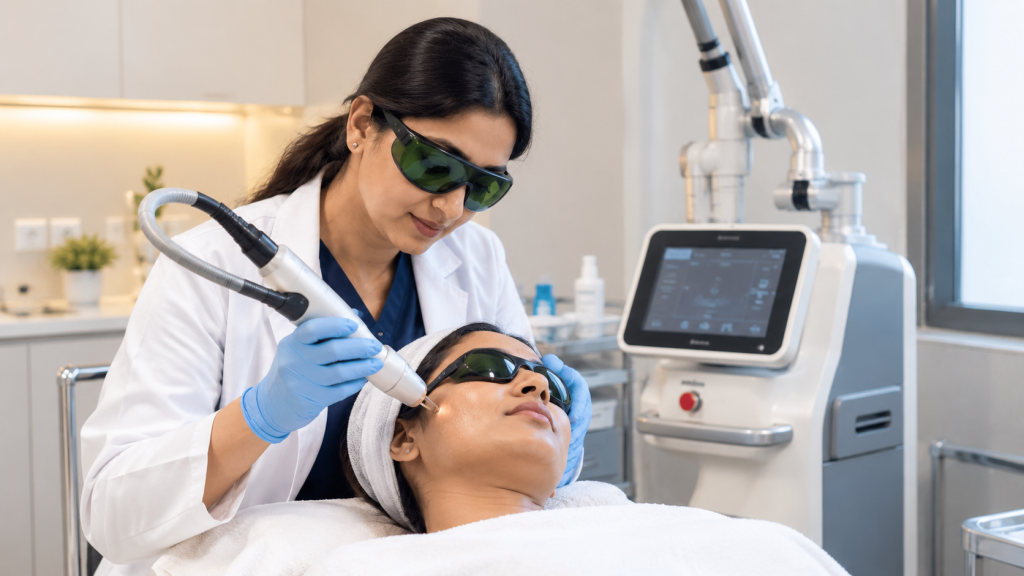
Q-Switched laser technology is the gold standard for dermal pigmentation and laser skin toning in Indian skin:
- Photo-Acoustic Principle: Emits high-energy nanosecond pulses of light (1064 nm wavelength) that penetrate deep into the dermis without damaging the outer surface.
- Melanin Fragmentation: The light energy shockwave breaks dense melanin granules into microscopic fragments. The body’s lymphatic scavenging system gradually clears these micro-particles over subsequent weeks.
- Zero Downtime: Unlike ablative lasers, Q-Switched laser toning causes no peeling, bleeding, or scabbing, allowing patients to resume daily activities immediately.
B. Dermatological Chemical Peels
Chemical peeling utilizes precise concentrations of medical-grade organic acids to exfoliate hyper-pigmented surface cells and block pigment formation:
- Glycolic Acid Peels (20% – 50%): Small-molecule Alpha Hydroxy Acid (AHA) that penetrates rapidly to dissolve intercellular bonds, accelerating epidermal turnover.
- Salicylic Acid Peels (20% – 30%): Lipid-soluble Beta Hydroxy Acid (BHA) ideal for acne-induced dark spots, clearing oil inside pores while reducing inflammation.
- Lactic & Mandelic Acid Peels: Larger molecule AHAs that offer gentle, hydrating exfoliation—ideal for sensitive skin prone to rebound pigmentation.
- TCA / Yellow Peels: Medium-depth peels containing Trichloroacetic Acid, Retinol, and Kojic Acid designed to lift deeper epidermal discoloration.
C. Mesotherapy & Skin Biostimulators
Injectable or microneedle-assisted delivery of pigment-lightening agents directly into the target dermal-epidermal junction:
- Tranexamic Acid Injections: Inhibits the plasminogen/plasmin system, blocking interactions between melanocytes and keratinocytes to reduce melasma vascularity and dark patches.
- Glutathione & Vitamin C Cocktails: Potent antioxidants delivered directly to target tissue to neutralize free radicals, suppress tyrosinase activity, and brighten skin tone.
D. Prescription Topical & Oral Pharmacotherapy
Medical management remains the backbone of pigment stabilization:
- Triple Combination Creams: Hydroquinone (short-term supervised use) + Tretinoin + Mild Topical Corticosteroid for aggressive short-term spot clearing.
- Non-Hydroquinone Lighteners: Azelaic Acid (15–20%), Alpha Arbutin, Kojic Acid, Niacinamide (4–5%), and Cysteamine for long-term safe maintenance.
- Oral Tranexamic Acid: Low-dose prescription oral therapy used under strict dermatological guidance for severe, recalcitrant dermal melasma.
4. Multi-Modality Pigment Management Strategy
Achieving lasting skin clarity often requires combining treatments that target different steps in the melanin production cycle:
                      [ Diagnostic Pigment Assessment ]
                                      │
          ┌───────────────────────────┴───────────────────────────┐
          ▼                                                       ▼
[ Melanocyte Suppression ]                              [ Pigment Elimination ]
          │                                                       │
          ├─ Topicals (Azelaic Acid / Arbutin)                    ├─ Q-Switched Laser (1064 nm)
          ├─ Oral Tranexamic Acid (if indicated)                  ├─ Chemical Peels (AHA / BHA)
          └─ Broad-Spectrum SPF 50+ Protection                    └─ Mesotherapy Infusion
          │                                                       │
          └───────────────────────────┬───────────────────────────┘
                                      │
                                      ▼
                        [ Long-Term Skin Clarity ]
5. Cost Breakdown of Pigmentation Treatments in Hyderabad
Treatment pricing varies based on clinic location, doctor qualification, machine quality (FDA-approved platforms vs. imported generic units), and total required sessions.
| Treatment Modality | Estimated Cost Range per Session (INR) | Recommended Session Count | Ideal Clinical Indication |
| Dermatologist Consultation | ₹500 – ₹1,200 | 1 – 2 initial visits | Diagnostic mapping & routine setup |
| Glycolic / Mandelic Peel | ₹2,000 – ₹4,000 | 4 – 6 Sessions | Epidermal dark spots, mild PIH |
| Advanced Yellow / TCA Peel | ₹3,500 – ₹6,500 | 2 – 4 Sessions | Stubborn melasma, sun damage |
| Q-Switched Laser Toning | ₹3,500 – ₹8,000 | 4 – 8 Sessions | Deep dermal melasma, overall toning |
| Targeted Sun Spot Removal | ₹2,500 – ₹5,000 | 1 – 3 Sessions | Isolated solar lentigines, freckles |
| Pigment Mesotherapy / Micro-infusion | ₹4,000 – ₹8,500 | 3 – 5 Sessions | Recalcitrant melasma, patchy dullness |
6. Top Healthcare & Aesthetic Localities in Hyderabad
Specialized skin centers offering advanced pigment removal treatments are conveniently situated across major hubs in Hyderabad:
- Banjara Hills & Jubilee Hills: Luxury dermatology clinics equipped with US-FDA-cleared laser platforms (e.g., MedLite C6, Harmony XL Pro, RevLite) led by certified cosmetic dermatologists.
- HITEC City, Madhapur & Gachibowli: High-tech clinics providing flexible scheduling and swift lunchtime laser procedures tailored for busy tech professionals.
- Kukatpally, Kondapur & Miyapur: Regional medical centers offering reliable clinical dermatology care and structured treatment packages.
- Secunderabad & Himayatnagar: Established skin care centers serving residential communities with comprehensive medical dermatological services.
7. Daily Skincare Routine & Sun Protection Guidelines
Clinical procedures yield maximum benefit when supported by a disciplined daily skincare routine customized for Hyderabad’s sun-dense climate:
Daily Pigment-Corrective Routine Protocol
Morning Protocol (AM)
├── 1. Gentle Non-Stripping Hydrating Cleanser
├── 2. Antioxidant Serum (10-15% L-Ascorbic Acid / Niacinamide)
├── 3. Lightweight Non-Comedogenic Barrier Moisturizer
└── 4. Broad-Spectrum Mineral Sunscreen (SPF 50+, PA++++, Tinted with Iron Oxides)

Evening Protocol (PM)
├── 1. Mild Cleanser (Double Cleanse if sunscreen/makeup applied)
├── 2. Prescribed Active (Azelaic Acid / Kojic Acid / Retinoid / Tranexamic Acid)
└── 3. Ceramide-Rich Barrier Repair Cream
Essential Protective Measures for Local Climate:
- Use Tinted Sunscreens: Visible light (blue light) from solar radiation and indoors triggers melasma flares. Tinted sunscreens containing Iron Oxides shield skin against visible light better than plain clear sunscreens.
- Reapply Sunscreen Consistently: Reapply sunscreen every 2 to 3 hours when outdoors or near windows.
- Filter Hard Tap Water: High mineral content in municipal or borehole water can irritate the skin barrier, increasing sensitivity and post-inflammatory dark spots. Consider using filtered water for facial washing.
8. Frequently Asked Questions (FAQs)
Q1: What is the best Pigmentation Treatment in Hyderabad?
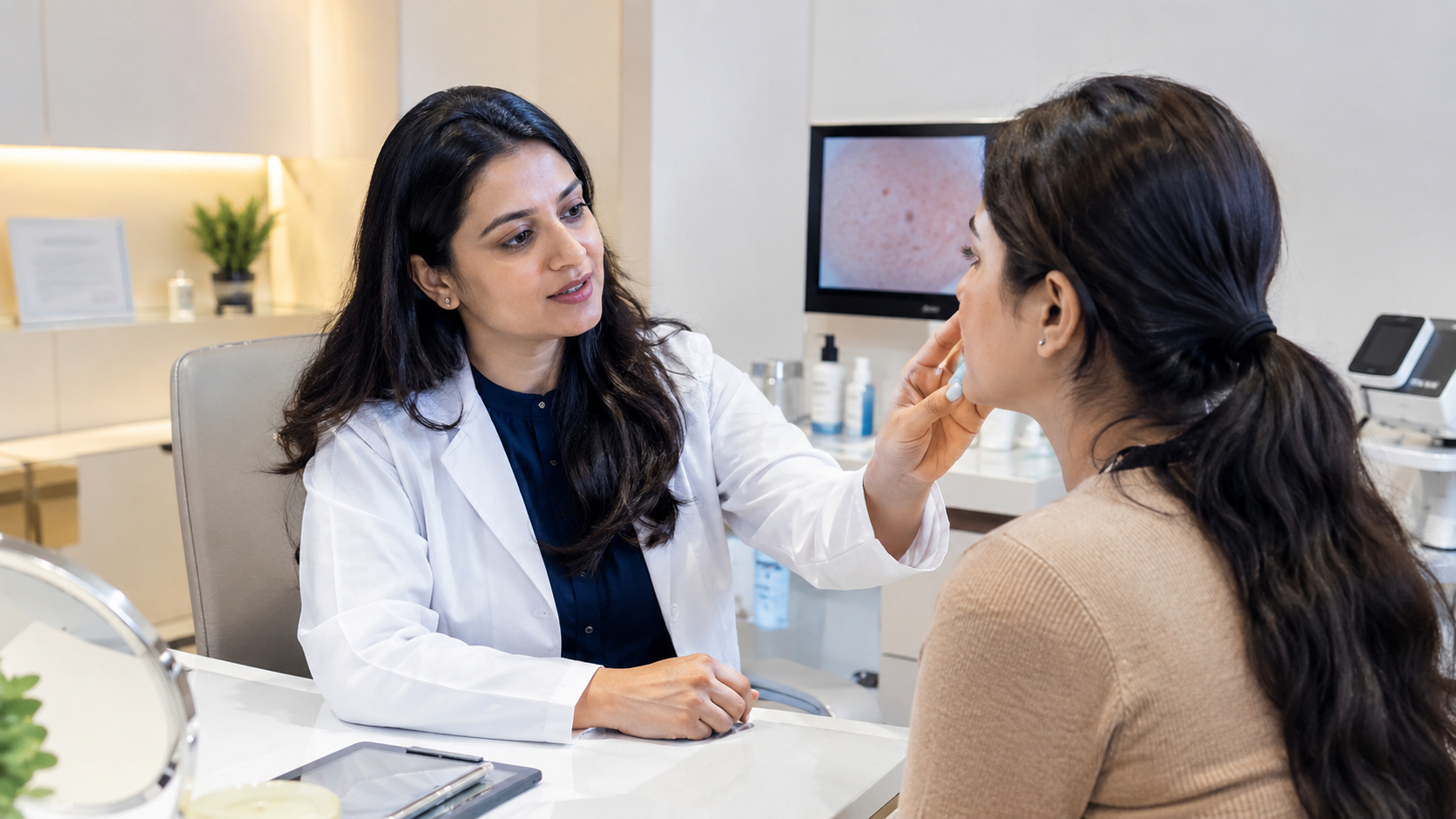
The best treatment depends on whether pigment resides in the upper epidermal layer or deep dermis. Certified dermatologists determine pigment depth using Wood’s lamp or dermoscopy, then curate a treatment plan combining Q-Switched laser toning, chemical peels, mesotherapy, and prescription topical lighteners.
Q2: How much does Pigmentation Treatment in Hyderabad cost?
Diagnostic consultations range between ₹500 and ₹1,200. Clinical procedures like chemical peels cost between ₹2,000 and ₹4,000 per session, while specialized Q-Switched laser toning or advanced melasma protocols range from ₹3,500 to ₹8,000 per session.
Q3: Can facial hyperpigmentation be permanently cured?
Epidermal pigmentation (like sun spots and post-inflammatory dark spots) can be completely removed. Hormonal conditions like Melasma can be put into deep remission; however, maintaining clarity requires long-term sun care and maintenance topicals to prevent recurrence.
Q4: How many sessions are required for clear skin?
Most patients require 4 to 8 clinical sessions spaced 2 to 4 weeks apart. Deep-seated dermal melasma or chronic sun damage may require longer maintenance schedules.
Q5: Are laser pigmentation treatments safe for Indian skin tones?
Yes. Q-Switched Nd:YAG lasers operating at 1064 nm are safe for Indian skin (Fitzpatrick Types IV–VI). Their photo-acoustic mechanism targets pigment without damaging surrounding tissue, preventing rebound hyperpigmentation.
Q6: What causes dark patches and melasma in Hyderabad residents?
High solar UV radiation in Hyderabad, combined with ambient heat, hormonal shifts (pregnancy, oral contraceptives), pollution, and hard tap water, stimulates melanocytes to overproduce melanin pigment.
Q7: What is the difference between Epidermal and Dermal Pigmentation?
Epidermal pigment sits near the skin surface, appearing brown with sharp borders, and responds rapidly to chemical peels. Dermal pigment lies deeper in the dermal layer, appearing blue-gray, and requires deep-penetrating Q-Switched laser pulses for breakdown.
Q8: Is laser skin toning painful?
No. Q-Switched laser toning is comfortable and requires no topical anesthesia. Patients describe the sensation as a light tingling or mild rubber-band snapping against the skin.
Q9: Why are home remedies and salon facials often ineffective?
Salon scrubs and DIY home remedies work only on superficial dead cells and often cause micro-abrasions. This friction can trigger inflammation, making hyperpigmentation worse. Dermatological therapies treat pigment deeper in the skin while protecting the skin barrier.
Q10: What is the role of Sunscreen in managing hyperpigmentation?
Sunscreen is the single most critical factor in pigment care. UV rays trigger melanocytes to synthesize melanin. Applying broad-spectrum SPF 50+ PA++++ sunscreen daily prevents dark spots from returning.
Q11: What is Post-Inflammatory Hyperpigmentation (PIH)?
PIH is dark discoloration left behind after skin inflammation or injury, such as acne breakouts, eczema, thermal burns, or aggressive mechanical exfoliation.
Q12: How does chemical peeling reduce dark patches?
Chemical peels use controlled organic acids to shed melanin-laden superficial cells, accelerating cellular turnover to reveal lighter, clearer skin underneath.
Q13: Can stress aggravate facial pigmentation?
Yes. Stress elevates systemic cortisol and Melanocyte-Stimulating Hormone (MSH) levels, which can trigger or exacerbate hormonal melasma and dark facial patches.
Q14: What active ingredients should I look for in pigment-correcting serums?
Look for dermatologically proven non-hydroquinone lighteners such as Alpha Arbutin, Azelaic Acid, Kojic Acid, Tranexamic Acid, Niacinamide, Vitamin C, and Retinoids.
Q15: Is there any downtime after laser pigment removal?
Laser skin toning has zero downtime, allowing immediate return to work. Focused spot treatments for sun spots may form mild micro-crusts that shed naturally within 5 to 7 days.
9. Next Steps: Schedule Your Clinical Assessment
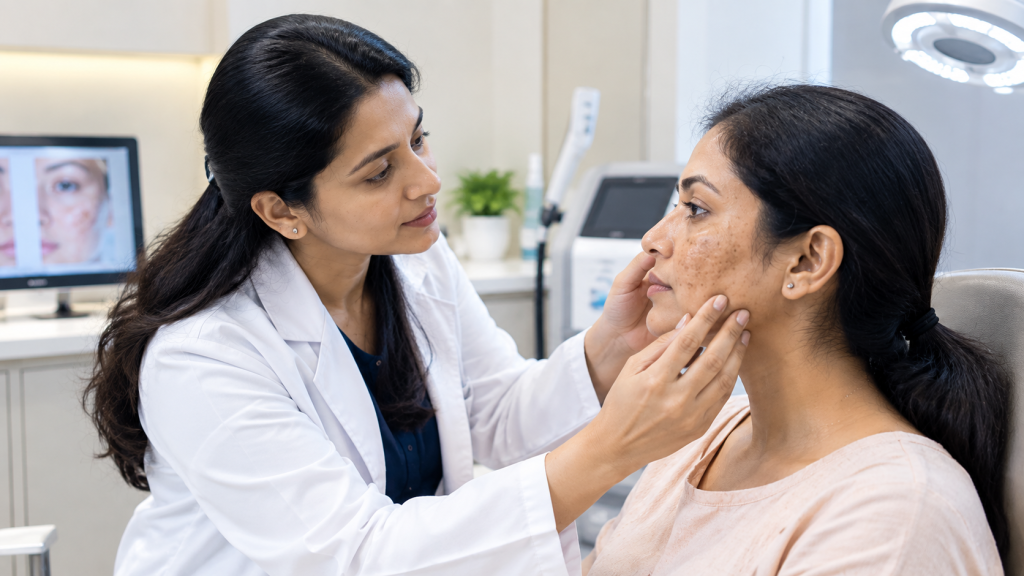
Restoring a clear, even complexion requires accurate diagnosis and expert clinical care. If stubborn dark patches, melasma, or sun spots affect your skin confidence, schedule a consultation with an MD dermatologist in Hyderabad. A comprehensive diagnostic skin analysis will identify your exact pigment depth and establish a safe, effective path to clear skin.