Table of Contents
Knee Replacement Surgeon in Hyderabad | Advanced Robotic & Joint Care
Chronic knee pain and joint stiffness can severely limit physical independence, turning daily activities like climbing stairs, taking evening walks, or standing up into painful challenges. In Hyderabad—a city that combines fast-paced corporate life in HITEC City and Gachibowli with multi-generational family homes in Banjara Hills, Secunderabad, and Kukatpally—knee joint degeneration affects thousands of individuals. When conservative care, lifestyle modifications, and biological injections no longer provide relief, consulting an expert knee replacement surgeon in Hyderabad becomes the decisive step toward restoring mobility.
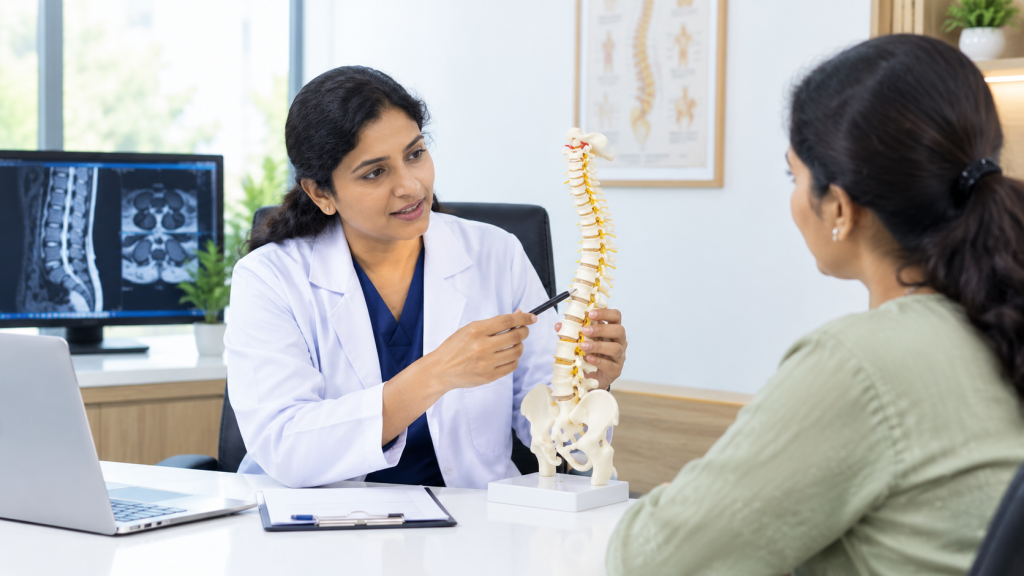
1. Defining the Role of a Specialized Knee Replacement Surgeon
A joint replacement surgeon is an orthopedic doctor who has completed specialized fellowship training in adult joint reconstruction, joint preservation, and robotic arthroplasty. Unlike general orthopedic doctors who treat basic fractures or soft-tissue sprains, a specialized knee surgeon focuses primarily on restoring altered joint mechanics caused by advanced wear and tear.
Core Qualifications & Clinical Expertise
- Sub-Specialty Fellowship Training: Completion of dedicated post-graduate fellowships (often from recognized centers in the UK, USA, Europe, or top Indian institutes) specifically in joint replacement surgery, revision arthroplasty, and keyhole joint preservation.
- High Surgical Volume: Surgical volume directly correlates with lower complication rates and superior alignment precision. Premier surgeons in Hyderabad routinely perform hundreds of joint replacements annually.
- Mastery of Advanced Techniques: Expertise in both conventional joint resurfacing and high-precision 3D robotic systems (such as CUVIS, ROSA, or MAKO), enabling tailored care based on individual bone structure.
- Revision Arthroplasty Capability: Ability to manage complex revision cases involving worn out, loose, or infected previous implants using specialized structural bone grafts and custom prosthetics.
2. Clinical Indications: When Is Knee Replacement Necessary?
Knee replacement is rarely the first step in care. Surgeons systematically evaluate patients to determine whether joint replacement is the correct option or if conservative management remains viable.
Clinical Progression of Osteoarthritis
Grade 1: Micro-Spurs =====> Grade 2: Mild Space Loss =====> Grade 3: Moderate Narrowing =====> Grade 4: Bone-on-Bone Friction
(Lifestyle Care)           (Physio & Bracing)               (Viscosupplement / PRP)          (Surgical Arthroplasty)
Key Triggers for Surgical Evaluation
- Stage 4 Radiographic Degeneration: Complete loss of protective articular cartilage, leading to severe bone-on-bone friction, subchondral sclerosis, and osteophyte growth.
- Rest & Night Pain: Persistent aching during rest or sleep that fails to respond to oral analgesics or joint injections.
- Progressive Angular Deformities: Development of notable bow-leggedness (varus alignment) or knock-knees (valgus alignment) due to asymmetric joint space collapse.
- Severe Mobility Limitation: Inability to walk even short distances (less than 100 to 200 meters) without experiencing severe joint pain.
- Failure of Non-Surgical Therapies: Lack of improvement following structured physical therapy, weight reduction, unloader braces, viscosupplementation, or PRP injections.
3. Surgical Modalities: Traditional vs. Robotic Knee Arthroplasty
Modern joint replacement surgery has evolved beyond standard manual techniques. Top surgeons in Hyderabad evaluate each patient’s anatomical needs to select the most effective surgical approach.
Comparative Overview of Surgical Options
| Feature / Metric | Conventional Total Knee Replacement | Computer-Navigated Surgery | Robotic-Assisted Knee Replacement |
| Surgical Alignment | Manual mechanical cutting jigs (1–2 mm margin of error). | Infrared computer tracking arrays. | Sub-millimeter 3D digital precision mapping. |
| Soft-Tissue Balancing | Manual ligament tension releases by eye. | Computerized alignment feedback. | Dynamic real-time soft-tissue stress balancing. |
| Bone Preservation | Standardized mechanical bone cuts. | Improved cut boundary checks. | Ultra-precise bone cuts that preserve healthy surrounding tissue. |
| Post-Op Pain Profile | Moderate; higher tissue manipulation. | Mild to moderate. | Significantly lower due to minimal soft-tissue trauma. |
| Average Hospital Stay | 4 to 5 Days | 3 to 4 Days | 2 to 3 Days. |
| Expected Implant Longevity | 15 to 20 Years | 18 to 22 Years | 20 to 25+ Years (due to optimal load distribution). |
4. Types of Knee Replacement Surgeries Offered
Depending on the extent of cartilage damage, a joint specialist may recommend replacing the entire joint or preserving healthy sections.
                     KNEE REPLACEMENT OPTIONS
                                │
     ┌──────────────────────────┴──────────────────────────┐
     ▼                                                     ▼
Total Knee Arthroplasty (TKA)             Unicompartmental (Partial) Replacement
 - Resurfaces all 3 compartments            - Replaces only inner or outer compartment
 - Best for widespread Grade 4 wear         - Preserves healthy natural ligaments (ACL/PCL)
1. Total Knee Replacement (TKA)
Indicated when degenerative wear affects multiple compartments (medial, lateral, and patellofemoral). The surgeon resurfaces the worn bone ends of the femur and tibia with biocompatible metal components, placing a durable medical-grade polyethylene spacer in between.
2. Unicompartmental (Partial) Knee Replacement (UKA)
When osteoarthritis is confined to a single section of the knee (most commonly the inner or medial compartment), partial replacement swaps out only the damaged surfaces.
- Key Advantages: Preserves the natural cruciate ligaments (ACL and PCL), requires smaller incisions, causes less post-op pain, and feels more like a natural joint.
3. Revision Knee Replacement
A complex procedure required when a previous knee replacement fails after 15 to 20 years due to natural mechanical wear, implant loosening, infection, or instability. The surgeon removes the old components, clears scar tissue, and secures specialized revision implants using structural metal augments or stem extensions.
5. Comprehensive Surgical Workflow: Pre-Op to Discharge
Undergoing joint replacement involves a well-organized medical path designed to maximize patient safety and surgical success.
Step 1: Pre-Operative Preparation (“Prehab”)
- Comprehensive Medical Clearance: Cardiac evaluation (ECG, 2D Echo), complete blood work, HbA1c screening (ideally below 7.0%), chest X-ray, and urine culture to exclude occult infections.
- Radiographic 3D Planning: High-resolution standing weight-bearing X-rays or CT scans to map exact joint anatomy and pre-select implant sizes.
- Home Adaptation Guidelines: Clearing walking paths, removing loose rugs, setting up an elevated chair, and installing bathroom grab bars.
Step 2: The Surgical Day Procedure
- Advanced Anesthesia Protocols: Regional spinal/epidural anesthesia combined with targeted adductor canal nerve blocks ensures effective pain management without muscle weakness.
- Minimally Invasive Execution: The surgeon accesses the joint using tissue-sparing techniques, removes damaged bone ends with robotic precision, fits prosthetic components, and verifies soft-tissue balance.
Step 3: Immediate In-Hospital Rehabilitation
- Day 1 (Post-Op): Supported weight-bearing walking with a walker begins within 12 to 24 hours under physical therapy guidance.
- Day 2 to 3: Practice climbing stairs, work on active knee bending up to 90 degrees, and transition to oral pain medications.
- Discharge Criteria: Safe independent walking with a walker, controlled pain, clean wound healing, and ability to perform basic daily activities.

6. Post-Operative Recovery & Rehabilitation Timeline
Achieving an excellent long-term result requires active commitment to physical rehabilitation after returning home.
Timeline of Recovery:
Week 1-2  ======> Walker-supported walking; passive flex exercises up to 90°; wound care.
Week 3-4  ======> Transition to cane walking; independent stair climbing practice.
Week 5-8  ======> Unassisted walking; active leg strengthening; return to driving.
Month 3+  ======> Full return to routine daily living; low-impact sports & swimming.
Key Phases of Post-Op Physical Therapy
- Weeks 1 to 2: Focus on pain management, reduction of joint swelling (cryotherapy), ankle pumps to prevent blood clots, and achieving 90 degrees of knee flexion.
- Weeks 3 to 4: Transition from a walker to a single walking stick. Perform quad-setting exercises, straight leg raises, and practice climbing stairs using the “good leg up, bad leg down” rule.
- Weeks 5 to 8: Achieve full extension (0 degrees) and active flexion beyond 110 degrees. Walk unassisted with a balanced stride and resume driving (once cleared by your surgeon).
- Months 3 to 6: Continue low-impact activities like stationary cycling, swimming, and fitness walking to maintain long-term joint health.
7. Cost Breakdown & Health Insurance Considerations in Hyderabad
Understanding expenses helps patients plan their care with clarity. Costs vary depending on surgical approach, hospital selection, room category, and implant choice.
Estimated Cost Comparison (in INR)
| Knee Surgery Procedure Type | Cost Range in Hyderabad (INR) | Primary Inclusions |
| Specialist Diagnostic & Surgical Evaluation | ₹600 – ₹1,500 | Orthopedic consultation, motion testing, gait analysis. |
| Standing Weight-Bearing X-Rays / 3D CT Scan | ₹1,500 – ₹9,500 | Radiographic imaging and robotic pre-op modeling. |
| Conventional Unilateral Total Knee Replacement | ₹1,50,000 – ₹2,80,000 | Standard implant, 4-day hospital stay, surgeon and OT charges. |
| Robotic Unilateral Total Knee Replacement | ₹2,50,000 – ₹4,50,000 | 3D robotic navigation, premium implant, short stay. |
| Bilateral Simultaneous Robotic Replacement | ₹4,20,000 – ₹6,80,000 | Double joint procedure, full inpatient stay, rehab. |
| Unicompartmental (Partial) Knee Replacement | ₹1,40,000 – ₹2,50,000 | Single-compartment implant, minimal stay, fast rehab. |
| Complex Revision Knee Replacement | ₹3,00,000 – ₹5,50,000 | Specialized augments, custom stems, extended OR time. |
Health Insurance & Financial Assistance
- Cashless Hospital Processing: Premier hospitals in Hyderabad support direct cashless claims through major Third-Party Administrators (TPAs) and private health insurance providers.
- Government Healthcare Coverage: Subsidized care options for eligible patients are available through government schemes like Aarogyasri (Telangana) and Ayushman Bharat at empaneled hospitals.
- Flexible EMI Payment Plans: Many hospitals offer zero-interest monthly payment plans to help cover out-of-pocket medical costs.
8. Regional Healthcare Access Across Hyderabad
Hyderabad features modern healthcare facilities, with experienced joint replacement surgeons, specialized bone clinics, and orthopedic hospitals conveniently located across key city zones.
- Western IT Sector (Jubilee Hills, Banjara Hills, HITEC City, Gachibowli, Kondapur):Home to advanced tertiary hospitals equipped with 3D robotic systems, high-definition laminar-flow surgical suites, and dedicated rehabilitation centers. Convenient for corporate employees and Western corridor residents.
- Central Sector (Somajiguda, Lakdi-Ka-Pul, Abids, Nampally):Features established institutions with long-standing joint replacement departments and senior orthopedic consultants.
- Northern & Eastern Sector (Secunderabad, Kukatpally, Miyapur, LB Nagar):Offers specialized orthopedic hospitals, diagnostic centers, and physical rehabilitation facilities serving suburban communities.
9. Decision Checklist: Evaluating Your Surgeon
Before selecting your knee replacement surgeon in Hyderabad, consider this evaluation checklist:
- [ ] Is the surgeon fellowship-trained specifically in joint replacement and robotic arthroplasty?
- [ ] How many knee replacement surgeries does the surgeon perform annually?
- [ ] Does the surgeon offer both robotic and conventional surgical approaches tailored to your needs?
- [ ] Is the surgeon affiliated with an accredited hospital featuring ultra-clean laminar-flow operating rooms and dedicated orthopedic ICUs?
- [ ] Does the care team provide a structured, in-house physical rehabilitation plan following surgery?

Frequently Asked Questions (FAQs)
1. How do I choose the best knee replacement surgeon in Hyderabad?
Look for a surgeon with specialized fellowship training in joint arthroplasty, high annual surgical case volumes, expertise in both robotic and conventional techniques, affiliation with accredited hospitals, and verified patient recovery outcomes.
2. What is the cost of knee replacement surgery in Hyderabad?
Costs generally range from ₹1,50,000 to ₹3,50,000 for conventional total knee replacement and ₹2,50,000 to ₹5,50,000 for advanced robotic-assisted knee replacement per joint, depending on implant selection and hospital facility.
3. What is the difference between total and partial knee replacement?
Partial knee replacement replaces only the single damaged section of the knee while leaving healthy cartilage and natural ligaments (ACL/PCL) intact. Total knee replacement resurfaces all three compartments of the knee joint.
4. Why is robotic knee replacement preferred by leading surgeons?
Robotic systems use 3D CT digital mapping to execute sub-millimeter accurate bone cuts and dynamic soft-tissue balancing. This minimizes muscle trauma, reduces post-operative pain, speeds up recovery, and optimizes implant alignment.
5. How long do modern knee replacement implants last?
Prosthetics constructed from high-grade titanium alloys, cobalt-chromium, and specialized cross-linked polyethylene typically last 20 to 25+ years when placed with high precision.
6. When should I see a knee replacement surgeon instead of continuing conservative therapy?
You should consult a specialist if you experience Stage 4 bone-on-bone pain, rest or night pain, progressive leg deformity, inability to walk short distances, or when injections and physical therapy no longer provide relief.
7. How quickly can I walk after knee replacement surgery?
Thanks to modern tissue-sparing techniques, advanced regional anesthesia, and immediate rehabilitation protocols, most patients begin walking with walker support within 12 to 24 hours post-surgery.
8. Is age a barrier to undergoing knee replacement surgery?
No, age alone is not a limiting factor. Surgeons evaluate physical fitness, cardiac clearance, bone density, and functional need. Successful replacements are routinely performed on active patients from their 40s to late 80s.
9. Is knee replacement surgery covered under health insurance in Hyderabad?
Yes, medically necessary joint replacements are covered by major health insurance policies and TPAs. Direct cashless hospitalization is available across empaneled medical centers.
10. What pre-operative medical clearances are required before knee surgery?
Pre-op checks include complete blood counts, HbA1c screening, kidney and coagulation profiles, 2D Echocardiogram, chest X-rays, urine culture, and weight-bearing digital knee X-rays or CT scans.
11. Can both knees be replaced at the same time (Bilateral Knee Replacement)?
Yes, simultaneous bilateral knee replacement can be performed on patients under 75 years of age who have good cardiac reserve, strong overall health, and no severe systemic risk factors.
12. What are the risks or complications associated with knee replacement?
While overall success rates exceed 95%, potential risks include surgical site infection (<1%), deep vein thrombosis (DVT), joint stiffness, or implant wear over long periods.
13. Which regions in Hyderabad host top knee replacement surgeons?
Leading joint replacement specialists practice across key healthcare hubs, including Jubilee Hills, Banjara Hills, HITEC City, Gachibowli, Secunderabad, and Kukatpally.
14. What exercises are recommended after knee replacement surgery?
Recommended exercises include quad-setting contraction drills, straight leg raises, ankle pumps, seated knee flexions, stationary cycling, and gait training guided by a physical therapist.
15. Can I kneel or squat after a knee replacement?
While modern high-flexion prosthetics allow deep bending, surgeons generally recommend avoiding routine deep squatting or sitting cross-legged on the floor to minimize wear on plastic components and maximize implant lifespan.