Table of Contents
Event Production Services | Professional Event Execution
Successful events require much more than a venue, schedule, and guest list. Behind a well-executed conference, corporate gathering, product launch, exhibition, award ceremony, seminar, or large-scale celebration is a coordinated production process that brings together staging, sound, lighting, visuals, technical equipment, crew, logistics, and event-day operations.
Event Production Services provide the professional planning and technical execution required to turn an event concept into a functioning live experience.
Event production covers the practical side of bringing an event to life. It can include stage construction, audio systems, lighting, LED displays, projection, video production, technical staffing, equipment coordination, rehearsals, show calling, backstage operations, and on-site troubleshooting.
For event organizers, professional production support can help create a structured event environment where each technical and operational element works according to the event schedule.
What Are Event Production Services?
Event Production Services refer to the professional planning, coordination, setup, operation, and dismantling of the technical and production elements required for an event.
Depending on the event, these services may include:
- Stage design and construction
- Audio and sound systems
- Professional microphones
- Event lighting
- LED screens and video walls
- Projection systems
- Video production
- Presentation systems
- Live streaming
- Stage management
- Technical crew
- Backstage coordination
- Technical rehearsals
- Show calling
- Power and equipment planning
- On-site technical support
The production requirements vary according to the event type, venue, audience size, program format, content, and technical complexity.
A small seminar may require a basic sound and presentation system, while a large corporate conference could require multiple LED screens, cameras, lighting systems, stage monitors, streaming infrastructure, and a dedicated technical crew.
Why Event Production Is Important
Event production connects the creative concept of an event with its physical execution.
An event may have excellent speakers and carefully planned content, but poor technical execution can affect the audience experience.
For example:
- A microphone failure can interrupt a presentation.
- Poor lighting can affect stage visibility.
- An incorrectly positioned screen can make presentations difficult to see.
- Weak audio coverage can prevent attendees from hearing clearly.
- Poorly coordinated stage transitions can create unnecessary delays.
- Unstable streaming can affect remote participation.
Professional event production addresses these requirements before and during the event.
The objective is not simply to provide equipment. It is to make sure the equipment, people, content, venue, and event schedule work together.
Key Components of Event Production Services
1. Event Production Planning
Production planning begins before equipment reaches the venue.
The production team evaluates:
- Event objectives
- Venue dimensions
- Audience capacity
- Stage requirements
- Program schedule
- Speaker requirements
- Presentation content
- Audio requirements
- Lighting requirements
- Video requirements
- Streaming requirements
- Power availability
- Technical restrictions
This information is used to create a production plan.
Good planning can identify potential technical issues before the event day.
2. Stage Production
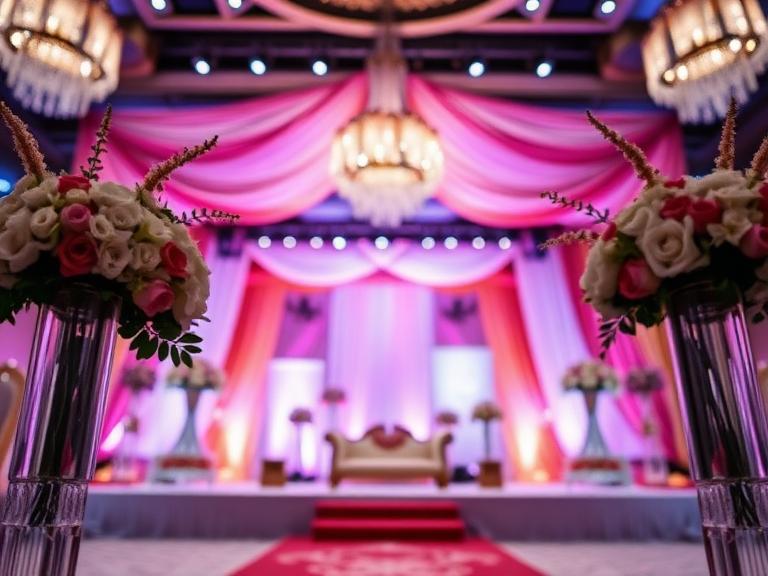
The stage is one of the primary visual elements of many events.
Stage production may include:
- Stage platforms
- Backdrops
- Podiums
- Stage furniture
- LED screens
- Branding panels
- Scenic elements
- Stage lighting
- Presentation monitors
The stage should support both the event’s visual identity and its functional requirements.
For a corporate conference, the stage may prioritize clean presentation and speaker visibility. For a product launch, the stage may require more dynamic visual elements.
3. Audio Production
Clear sound is essential for communication.
Audio production may include:
- Main speaker systems
- Wireless microphones
- Lapel microphones
- Headset microphones
- Podium microphones
- Stage monitors
- Mixing consoles
- Audio processors
- Playback systems
The audio setup should be appropriate for the venue’s size and acoustics.
A professional production team can also conduct sound checks to identify unwanted noise, feedback, volume inconsistencies, and microphone issues before the event begins.
4. Event Lighting
Lighting serves both functional and creative purposes.
It helps audiences see speakers and performers while also establishing the visual atmosphere of the event.
Common event lighting equipment can include:
- LED fixtures
- Spotlights
- Wash lights
- Moving lights
- Stage lights
- Architectural lighting
- Decorative lighting
Lighting design should take the venue, stage layout, camera requirements, and event format into account.
5. LED Screens and Video Displays
LED screens and video walls are frequently used for large events.
They can display:
- Event branding
- Speaker names
- Presentations
- Corporate videos
- Product demonstrations
- Live camera feeds
- Event graphics
- Sponsor content
Screen size and placement should be determined according to the venue and audience viewing distances.
The goal is to make content clearly visible without obstructing speakers or other important stage elements.
6. Audio Visual Production
Audio visual production combines sound and visual technology to support communication and presentation.
A professional AV setup may include:
- LED screens
- Projectors
- Cameras
- Presentation computers
- Video switchers
- Audio systems
- Confidence monitors
- Video playback systems
AV production is particularly important for conferences, seminars, product launches, exhibitions, and corporate events.
7. Technical Crew and Operators
Professional equipment requires experienced people to operate it.
Depending on event requirements, a production team may include:
- Production manager
- Technical director
- Audio engineer
- Lighting operator
- Video operator
- LED technician
- Camera operators
- Stage manager
- Show caller
- Streaming technician
- Stagehands
The number of crew members depends on the scale and complexity of the event.
Event Production for Corporate Events
Corporate events often require precise scheduling and professional presentation.
Examples include:
- Annual meetings
- Conferences
- Business summits
- Dealer meets
- Employee events
- Product launches
- Award functions
- Leadership meetings
- Press conferences
- Corporate celebrations
Production teams may coordinate audio, stage design, lighting, presentation screens, videos, speaker microphones, and technical rehearsals.
Because corporate programs often follow a fixed agenda, timing and technical coordination are particularly important.
Event Production for Conferences
Conferences may involve multiple speakers, panel discussions, presentations, videos, and audience interactions.
Conference production can include:
- Stage setup
- Speaker microphones
- Presentation screens
- Confidence monitors
- Panel microphones
- Timer displays
- Video playback
- Live cameras
- Recording
- Streaming
Technical rehearsals are useful when several speakers are involved.
Presenters can also test their presentations before going live.
Event Production for Product Launches
Product launches often combine presentations, videos, demonstrations, stage design, and lighting.
Production planning may cover:
- Opening sequence
- Introductory video
- Speaker presentation
- Product demonstration
- Product reveal
- Audience interaction
- Closing segment
Each stage needs to be coordinated with lighting, audio, video, and stage operations.
Event Production for Exhibitions
Exhibitions often contain multiple exhibitors and activity zones.
Production services can support:
- Exhibition stage
- Presentation areas
- Audio systems
- LED displays
- Digital signage
- Product demonstrations
- Opening ceremonies
- Panel discussions
The production plan should account for the movement of visitors and the need to avoid excessive sound overlap between different areas.
Event Production for Award Ceremonies
Award ceremonies require accurate coordination between presenters, nominees, winners, stage managers, audio operators, lighting teams, and video operators.
Production may include:
- Award stage
- Winner graphics
- Presentation screens
- Spotlighting
- Walk-up music
- Video playback
- Stage microphones
- Photography and video feeds
Cue-based production helps maintain the flow of the ceremony.
Live Event Production
Live events have a unique technical challenge because everything happens in real time.
Unlike recorded content, live events have limited opportunities to correct mistakes after they occur.
Professional live event production therefore emphasizes:
- Equipment testing
- Technical rehearsals
- Backup systems
- Clear communication
- Stage management
- Cue management
- Real-time troubleshooting
The production team must remain prepared for unexpected changes.
Technical Rehearsals
A technical rehearsal allows the production team to test the event before the audience enters.
Testing can include:
- Microphones
- Audio levels
- Presentation files
- LED screens
- Lighting cues
- Videos
- Cameras
- Streaming
- Stage movement
- Speaker entrances
- Transitions
For complex events, a full run-through can help identify timing issues and communication gaps.
Event Production Workflow
A structured production process usually follows several stages.
Step 1: Understanding the Event Brief
The production team begins by understanding the event’s objectives, format, audience, venue, schedule, and expected experience.
Step 2: Venue Assessment
The venue is assessed for:
- Stage area
- Ceiling height
- Power
- Acoustics
- Rigging possibilities
- Loading access
- Audience seating
- Technical control areas
Step 3: Technical Design
The required audio, video, lighting, staging, and technical equipment are identified.
Step 4: Production Scheduling
Equipment delivery, installation, testing, rehearsal, event operation, and dismantling are scheduled.
Step 5: Equipment Setup
Production equipment is installed and positioned according to the technical plan.
Step 6: Testing
Systems are tested individually and collectively.
Step 7: Rehearsal
Speakers, performers, presenters, and technical teams rehearse important sequences.
Step 8: Live Execution
The production crew manages the technical elements throughout the event.
Step 9: Dismantling
After the event, equipment is safely dismantled, packed, and removed from the venue.
Common Event Production Challenges
Audio Feedback
Microphone feedback can occur when sound from speakers is picked up again by microphones.
Proper microphone placement, sound checks, and audio engineering can reduce the risk.
Power Problems
Large productions may require substantial electrical capacity.
Power planning should therefore be completed before installation.
Presentation Problems
Presentations may contain incompatible formats, incorrect resolutions, missing videos, or outdated files.
Testing presentations in advance can help avoid interruptions.
Internet Connectivity
Streaming and cloud-based event platforms depend on stable connectivity.
Important events may require backup connectivity arrangements.
Last-Minute Changes
Speakers may change presentations, schedules may shift, or event organizers may request new content.
A flexible production team should be able to respond without disrupting the entire program.
How to Choose an Event Production Company
Selecting the right production partner requires more than comparing equipment lists.
Consider the following factors.
Relevant Experience
Look for experience with events similar to yours.
Technical Capability
Check whether the company can manage audio, video, lighting, staging, streaming, and technical operations.
Equipment Standards
Ask about equipment quality, maintenance, and availability.
Technical Personnel
Experienced operators are essential for complex productions.
Rehearsal Process
Understand how the production company prepares before the event.
Backup Planning
Ask about contingency plans for equipment, power, internet, and technical failures.
Communication
Production teams need to communicate effectively with event organizers, venue teams, speakers, and other vendors.
Transparent Scope
A clear production scope can help prevent misunderstandings regarding equipment, staffing, installation, and technical support.
Event Production Services in Hyderabad, Visakhapatnam and Vijayawada
Different cities and venues can present different production requirements.
In Hyderabad, large corporate conferences, exhibitions, business events, product launches, and professional gatherings may require comprehensive production planning.
In Visakhapatnam, corporate programs, conferences, weddings, cultural events, exhibitions, and large gatherings can require venue-specific staging and technical arrangements.
In Vijayawada, corporate functions, business meetings, celebrations, conferences, and social events may also require professional production coordination.
For each location, the production plan should be adapted to the venue rather than relying on a standard equipment package.
Why Professional Event Production Matters
Professional production creates a bridge between planning and execution.
It helps ensure that:
- Speakers can be heard clearly.
- Visual content can be seen.
- Stage activities follow the program.
- Technical teams understand their responsibilities.
- Equipment is tested before use.
- Presentations are properly integrated.
- Lighting supports the event environment.
- Live content can be managed effectively.
- Technical problems can be addressed quickly.
The ultimate objective is a smooth event experience for both organizers and attendees.
Frequently Asked Questions
1. What are Event Production Services?
Event Production Services include planning, coordinating, installing, operating, and dismantling the technical and production elements required for an event.
2. What does an event production company do?
An event production company can manage staging, audio, lighting, video, LED displays, technical equipment, production crew, rehearsals, and event-day technical operations.
3. What types of events need production services?
Corporate events, conferences, exhibitions, product launches, seminars, award ceremonies, business summits, entertainment programs, and large-scale events can benefit from professional production.
4. What is included in event production?
Depending on the event, services may include stage production, audio, lighting, video, LED displays, AV systems, technical staffing, rehearsals, show calling, and on-site support.
5. Do event production services include stage setup?
Yes. Stage production can include platforms, backdrops, podiums, LED screens, stage furniture, scenic elements, and associated technical systems.
6. Can event production companies provide sound systems?
Yes. Professional sound production can include speakers, microphones, mixing consoles, monitors, processors, and audio operators.
7. Are LED screens part of event production?
LED screens and video walls can be included when the event requires large-format visual communication, presentations, videos, branding, or live camera feeds.
8. What is technical event production?
Technical event production refers to the management of the technical infrastructure supporting an event, including audio, video, lighting, staging, presentation systems, streaming, and technical crew.
9. Why is an event rehearsal important?
A rehearsal allows the production team and presenters to test equipment, presentations, stage movements, lighting cues, audio levels, videos, and transitions before the event begins.
10. Can event production services support outdoor events?
Yes. Outdoor events may require specialized staging, weather considerations, power planning, audio coverage, lighting, LED displays, and additional technical safety measures.
11. Can event production support hybrid events?
Yes. Hybrid production can combine cameras, professional audio, streaming equipment, internet connectivity, presentation systems, and remote speaker integration.
12. What is included in corporate event production?
Corporate production can include stage design, professional audio, lighting, LED displays, presentation systems, video playback, technical staffing, rehearsals, and event-day coordination.
13. How much do Event Production Services cost?
Costs vary according to event size, venue, equipment requirements, production complexity, duration, technical staffing, staging, LED screens, lighting, and other services. A customized production plan is generally required for accurate pricing.
14. How early should event production be planned?
The earlier production requirements are identified, the more effectively the team can assess the venue, design the technical setup, arrange equipment, coordinate vendors, and conduct rehearsals.
15. What should I look for in an event production company?
Consider relevant experience, equipment quality, technical expertise, production crew, contingency planning, communication, rehearsal procedures, and transparent service scope.
16. Can event production services include live streaming?
Yes. Live streaming may include cameras, audio mixing, video switching, encoding, internet connectivity, graphics, and streaming platform integration.
17. Does event production include lighting?
Yes. Depending on the event, lighting may include stage lighting, spotlights, wash fixtures, moving lights, architectural lighting, and decorative lighting.
18. Can production services be customized for different venues?
Yes. A professional production plan should be adapted to venue dimensions, acoustics, audience layout, power availability, rigging conditions, stage requirements, and event objectives.
19. Does Prashasta Events provide event production services?
Prashasta Events can coordinate event production requirements as part of its broader event planning and management capabilities, depending on the event scope and technical requirements.

Conclusion
Event Production Services are an important part of delivering organized, technically reliable, and professionally presented events. From stage construction and audio systems to lighting, LED displays, video production, technical rehearsals, and event-day coordination, production involves numerous interconnected elements.
A structured production process begins with understanding the event brief and venue and continues through technical design, equipment setup, testing, rehearsal, live execution, and post-event dismantling.
Whether the event is a corporate conference, exhibition, product launch, seminar, award ceremony, business gathering, or large-scale live program, professional production support can help ensure that the technical infrastructure works alongside the event schedule and creative objectives.
Prashasta Events can coordinate production requirements according to the specific format, venue, audience, and technical needs of an event, helping organizers bring their planned experience into practical execution.