Table of Contents
Advanced Acne Scar Removal Treatment Hyderabad | Dr. Showrya Gadde
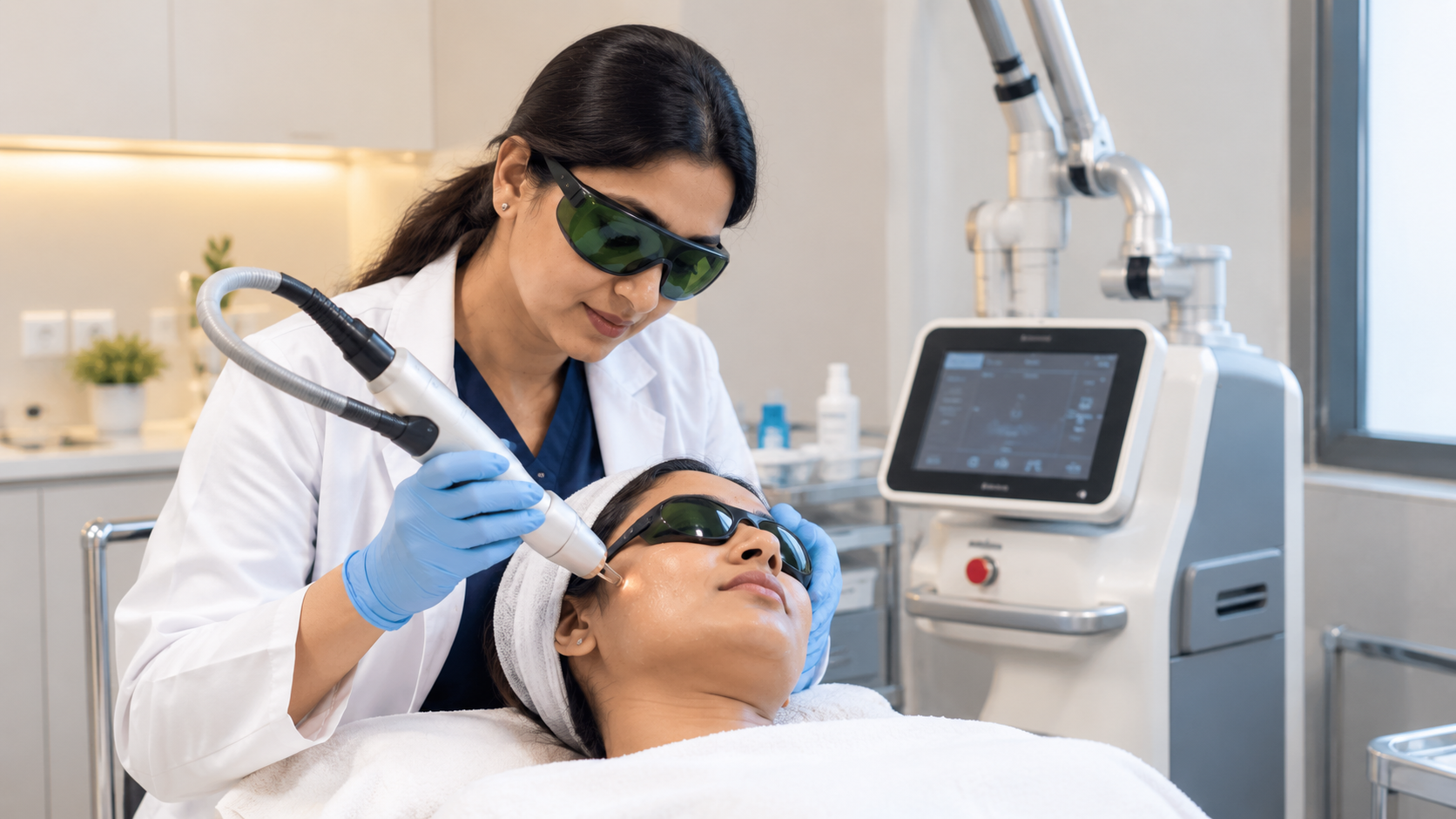
Acne vulgaris remains one of the most prevalent dermatological disorders globally, affecting over 85% of adolescents and young adults. While active inflammatory breakouts eventually subside, the structural damage left in their wake frequently results in permanent, disfiguring acne scars. For residents across Hyderabad—from technology centers in HITEC City, Kondapur, and Madhapur to residential areas like Jubilee Hills, Banjara Hills, Gachibowli, and KPHB—seeking professional Acne Scar Removal Treatment in Hyderabad has become a priority for restoring smooth skin texture and self-confidence.
Achieving meaningful scar revision requires an understanding of wound-healing biology, precise scar classification, and evidence-based combination protocols administered by qualified medical dermatologists.
1. Pathophysiology: How Structural Acne Scars Form
Acne scars develop when severe inflammation within the pilosebaceous unit ruptures the follicular wall, releasing sebum, keratin debris, and Cutibacterium acnes (C. acnes) bacteria into the surrounding dermis.
The Pathophysiological Sequence
- Follicular Rupture & Inflammatory Infiltration: As bacteria proliferate within an occluded hair follicle, neutrophilic and lymphocytic immune infiltrates flood the reticular and papillary dermis. Matrix metalloproteinases (MMPs) secreted during this cascade degrade structural Type I and Type III collagen.
- Matrix Destruction & Collagen Deficit: When inflammation destroys more extracellular matrix than the body can rebuild during the healing phase, the skin heals with a structural deficit, creating a depressed or atrophic scar.
- Fibrotic Tethering: During the healing of rolling scars, dense fibrotic collagen bands anchor the lower epidermis to the underlying subcutaneous fascia, pulling the skin surface downward into wave-like indentations.
- Aberrant Fibroblast Hyperplasia: Conversely, if fibroblasts produce excess disorganized collagen without adequate enzymatic degradation, raised hypertrophic or keloidal scars develop.
2. Comprehensive Classification of Acne Scar Morphologies
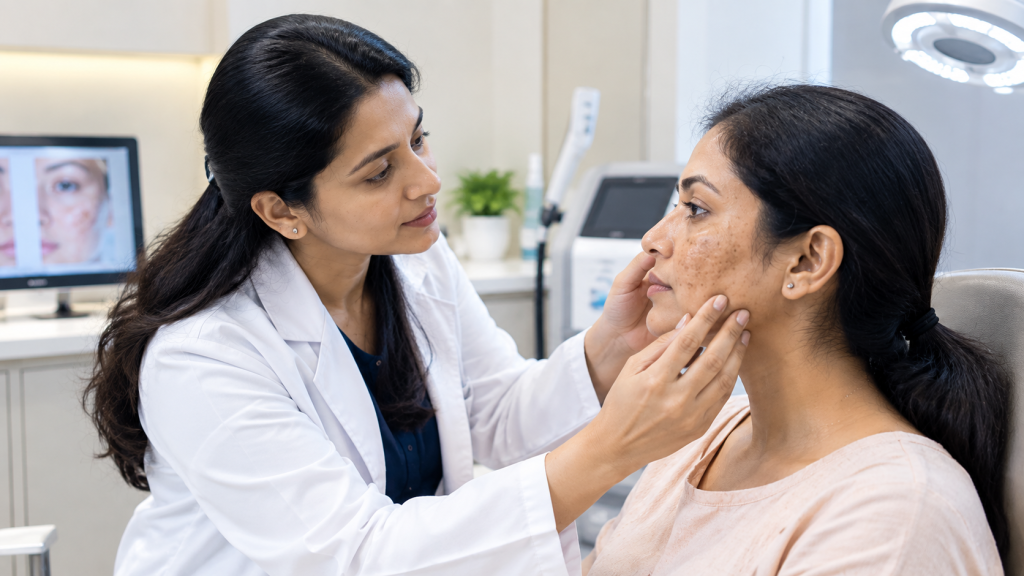
A patient’s face rarely presents with a single scar type. Accurate clinical mapping of scar sub-types is necessary before selecting a treatment protocol.
                   ┌─────────────────────────────────────────┐
                   │        ACNE SCAR CLASSIFICATION         │
                   └────────────────────┬────────────────────┘
                                        │
           ┌────────────────────────────┴────────────────────────────┐
           ▼                                                         ▼
┌────────────────────┐                                    ┌────────────────────┐
│   ATROPHIC SCARS   │                                    │ HYPERTROPHIC SCARS │
│ (Tissue Deficit)   │                                    │ (Excess Collagen)  │
└──────────┬─────────┘                                    └──────────┬─────────┘
           │                                                         │
 ┌─────────┼──────────┬──────────┐                          ┌────────┴────────┐
 ▼         ▼          ▼          ▼                          ▼                 ▼
Ice Pick Boxcar    Rolling    Anetoderma               Hypertrophic        Keloid
 Scars   Scars      Scars     (Macular)                  Scars             Scars
A. Atrophic Scars (Depressed)
- Ice Pick Scars (60–70% of cases): Narrow (< 2 mm), deep, steeply angled depressions extending into the deep dermis or subcutaneous tissue. They resemble clean punctures and require targeted focal chemical treatment.
- Boxcar Scars (20–30% of cases): Round-to-oval depressions with sharply demarcated vertical edges.
- Shallow Boxcar: 0.1 to 0.5 mm deep; highly responsive to energy resurfacing.
- Deep Boxcar: > 0.5 mm deep; requires punch elevation or subcision prior to resurfacing.
- Rolling Scars (15–25% of cases): Wide (4 to 5 mm or greater), shallow depressions caused by fibrotic tethering bands anchoring the dermis to subcutaneous fascia, creating a undulating, wave-like skin texture.
- Macular Atrophic Scars: Flat, hyperpigmented or hypopigmented areas of structural dermal thinning where elastic fibers are permanently lost.
B. Hypertrophic and Keloidal Scars (Raised)
- Hypertrophic Scars: Raised, erythematous lesions confined within the borders of the original acne wound, commonly seen along the jawline, chest, and back.
- Keloid Scars: Firm, nodular growths extending beyond the initial wound boundaries due to persistent fibroblast proliferation.
3. Clinical Modalities for Acne Scar Removal in Hyderabad
Modern dermatological care favors multi-modality combination therapy. Relying on a single laser or procedure rarely resolves complex, multi-depth acne scarring.
                           ┌────────────────────────────────────────┐
                           │   ACNE SCAR REMOVAL TREATMENT MODS     │
                           └───────────────────┬────────────────────┘
                                               │
       ┌──────────────────┬────────────────────┼──────────────────┬──────────────────┐
       ▼                  ▼                    ▼                  ▼                  ▼
┌──────────────┐   ┌──────────────┐     ┌──────────────┐   ┌──────────────┐   ┌──────────────┐
│ Energy Devices│   │ Microneedling│     │ Subdermal    │   │ Focal Chemical│  │ Regenerative │
│ (CO2, Erbium)│   │ Radiofreq.   │     │ Subcision    │   │ Reconstruction│  │ Biostimulant │
│              │   │   (MNRF)     │     │ (Nokor/Cann) │   │ (TCA CROSS)  │   │ (PRF / PN)   │
└──────────────┘   └──────────────┘     └──────────────┘   └──────────────┘   └──────────────┘
1. Microneedling Radiofrequency (MNRF)
MNRF combines mechanical micro-needling with radiofrequency thermal energy delivered directly to the deep dermis. Insulated micro-needles bypass the epidermis, protecting melanocytes from excess heat.
- Mechanism: Mechanical needle entry triggers physical wound healing; RF thermal energy contracts collagen fibers and stimulates heat-shock proteins to drive long-term neocollagenesis.
- Clinical Advantage: Safe for South Asian skin (Fitzpatrick IV–VI), with minimal risk of post-inflammatory hyperpigmentation (PIH) and short recovery timelines (24–48 hours).
2. Fractional Carbon Dioxide (CO2) Laser Resurfacing (10,600 nm)
Fractional CO2 laser resurfacing creates microscopic thermal zones (MTZs) in the dermis, vaporizing columns of damaged tissue while leaving surrounding tissue intact to speed re-epithelialization.
- Clinical Utility: Ideal for shallow-to-medium boxcar scars, textural roughness, and overall skin tightening.
3. Subcision (Subdermal Fibrotic Release)
Rolling scars are physically pulled down by fibrotic bands in the subcutaneous layer. Subcision uses a specialized instrument (such as a Nokor needle, blunt cannula, or Taylor Liberator) inserted under local anesthesia to cut these tethering bands.
- Augmented Subcision: Once bands are released, autologous Platelet-Rich Fibrin (PRF), hyaluronic acid fillers, or Polynucleotides (PN) can be introduced beneath the scar base to prevent re-tethering and promote matrix remodeling.
4. TCA CROSS (Chemical Reconstruction of Skin Scars)
Trichloroacetic acid (TCA) in high concentrations (70% to 100%) is applied directly to the base of ice-pick and narrow boxcar scars using a micro-applicator.
- Mechanism: Causes local protein coagulation, triggering an acute inflammatory response that closes deep scar tracts from the bottom up.
4. Customized Treatment Framework by Scar Sub-Type
| Scar Sub-Type | Primary Treatment Modality | Synergistic Secondary Modality | Expected Clinical Improvement |
| Ice Pick Scars | TCA CROSS (70–100%) | MNRF / Fractional CO2 Laser | 50% – 70% |
| Shallow Boxcar | Fractional CO2 Laser / Erbium:YAG | Medical Chemical Peels | 60% – 80% |
| Deep Boxcar | Punch Elevation / Punch Excision | Fractional CO2 Laser Resurfacing | 50% – 75% |
| Rolling Scars | Subcision (Nokor Needle / Cannula) | MNRF + PRF Injections | 70% – 85% |
| Hypertrophic Scars | Intralesional Triamcinolone (TAC) | Pulsed Dye Laser (PDL) / Cryotherapy | 60% – 80% |
| Post-Inflammatory Hyperpigmentation | Q-Switched Nd:YAG Laser | Topical Tyrosinase Inhibitors / Peels | 80% – 95% |
5. Cost Breakdown of Acne Scar Removal Treatment in Hyderabad
Treatment pricing depends on scar severity, technology used, clinic location, practitioner expertise, and the number of sessions required.
| Procedure / Modality | Estimated Cost per Session (INR) | Recommended Sessions | Total Estimated Investment (INR) |
| Dermatologist Consultation | ₹700 – ₹1,500 | 1 Initial + Follow-ups | ₹700 – ₹1,500 |
| TCA CROSS Technique | ₹3,000 – ₹6,000 | 3 – 5 Sessions | ₹9,000 – ₹30,000 |
| Chemical Peels (Salicylic / AHA) | ₹2,500 – ₹5,000 | 4 – 6 Sessions | ₹10,000 – ₹30,000 |
| Microneedling Radiofrequency (MNRF) | ₹8,000 – ₹16,000 | 4 – 6 Sessions | ₹32,000 – ₹96,000 |
| Fractional CO2 Laser Resurfacing | ₹7,000 – ₹15,000 | 3 – 5 Sessions | ₹21,000 – ₹75,000 |
| Subcision (Standalone / Cannula) | ₹5,000 – ₹12,000 | 2 – 4 Sessions | ₹10,000 – ₹48,000 |
| Subcision + PRF / Filler Combo | ₹12,000 – ₹25,000 | 2 – 3 Sessions | ₹24,000 – ₹75,000 |
6. Pre-Procedure & Post-Procedure Clinical Care
Adhering to strict pre- and post-procedure protocols is essential for collagen synthesis and preventing post-inflammatory hyperpigmentation (PIH).
Pre-Procedure Protocol (2 Weeks Prior)
- Discontinue Active Exfoliants: Stop topical retinoids, tretinoin, glycolic acid, salicylic acid, and vitamin C serums 5 to 7 days before treatment to maintain skin barrier integrity.
- Sun Protection: Apply broad-spectrum SPF 50+ sunscreen daily. Avoid direct sun exposure that could stimulate melanocytes.
- Prophylaxis: Patients with a history of herpes simplex virus (cold sores) should start oral antiviral medication 48 hours prior if undergoing perioral laser resurfacing.
- Avoid Blood Thinners: Avoid NSAIDs, fish oil, and vitamin E supplements for 3 to 5 days before subcision to minimize bruising.
Post-Procedure Protocol (1 to 14 Days After)
- First 24–48 Hours: Cleanse gently with mild, soap-free cleansers. Apply prescribed occlusive ointments (such as petrolatum or lipid-repair balms) to support epithelial recovery.
- Sun Protection: Avoid direct sun exposure for 3 to 5 days. Apply zinc oxide or titanium dioxide broad-spectrum physical sunscreen regularly once skin re-epithelializes.
- Do Not Pick Crusts: Allow micro-crusts formed by CO2 laser or TCA CROSS to shed naturally. Premature removal increases the risk of scarring and hyperpigmentation.
- Avoid Heat & Exercise: Skip intense workouts, saunas, hot showers, and swimming pools for 48 to 72 hours to avoid excessive inflammation and vasodilation.
7. Comparative Analysis: Clinical Modalities vs. At-Home Remedies
| Parameter | Clinical Procedures (MNRF, CO2 Laser, Subcision) | At-Home Remedies & Home Dermarollers |
| Penetration Depth | Reaches deep dermis (1.5 mm to 3.5 mm) with medical precision | Limited to superficial stratum corneum (< 0.25 mm) |
| Structural Impact | Rebuilds extracellular matrix and severs fibrotic bands | Surface hydration only; no structural remodeling |
| Safety & Sterility | Performed in sterile clinical setups by dermatologists | High risk of bacterial contamination and micro-tears |
| Clinical Efficacy | Documented 60%–80% texture improvement in clinical trials | Ineffective for true atrophic structural scars |
| Risk Profile | Managed, temporary redness or swelling | Risk of hyperpigmentation, infections, and worsening scars |

8. Frequently Asked Questions (FAQs)
Q1: What is the most effective Acne Scar Removal Treatment in Hyderabad?
The most effective approach is multi-modality combination therapy. Combining Subcision for tethered rolling scars, TCA CROSS for ice pick scars, and Microneedling Radiofrequency (MNRF) or Fractional CO2 laser resurfacing yields superior collagen synthesis and smoother texture.
Q2: How much does acne scar removal treatment cost in Hyderabad?
In Hyderabad, single procedures like Chemical Peels or TCA CROSS range from ₹3,000 to ₹6,000 per session. Advanced energy therapies like MNRF or Fractional CO2 Laser Resurfacing typically cost between ₹7,000 and ₹16,000 per session.
Q3: Can acne scars be removed 100% permanently?
While 100% tissue restoration is biologically impossible once native dermal architecture is lost, modern clinical scar revision protocols permanently improve skin texture, depth, and smoothness by 70% to 90%.
Q4: How many sessions of laser or MNRF treatment will I need?
Most patients require 4 to 6 clinical sessions spaced 4 to 6 weeks apart to achieve optimal dermal collagen remodeling and textural improvement.
Q5: Is laser acne scar removal safe for dark Indian skin tones?
Yes, provided the treatment is administered by a qualified dermatologist using equipment calibrated for South Asian skin (Fitzpatrick Types IV–VI), such as insulated-needle MNRF or non-ablative lasers, to avoid post-inflammatory hyperpigmentation (PIH).
Q6: What is the recovery downtime following Fractional CO2 laser resurfacing?
Fractional CO2 laser resurfacing typically involves 3 to 5 days of mild erythema, warmth, micro-crusting, and light shedding. Social downtime is minimal when proper post-care ointments are applied.
Q7: What is Subcision and how does it lift depressed rolling scars?
Subcision uses a specialized Nokor needle or blunt cannula inserted under local anesthesia beneath the skin to physically sever fibrotic bands pulling the epidermis down, allowing the scar base to lift level with surrounding tissue.
Q8: How does TCA CROSS work on deep ice pick scars?
TCA CROSS involves depositing high-concentration Trichloroacetic Acid (70%–100%) precisely into the base of narrow ice pick scars. This induces controlled chemical coagulation that stimulates fresh collagen synthesis from the bottom up.
Q9: Is the acne scar removal procedure painful?
Procedures are well-tolerated. High-potency topical numbing cream is applied 30 to 45 minutes before energy-based therapies or subcision to ensure minimal discomfort during treatment.
Q10: Must active acne be cured before starting scar removal treatment?
Yes. Dermatologists prioritize clearing active bacterial acne and sebum overproduction first to stop new scar formation before initiating invasive scar revision protocols.
Q11: What is the difference between hypertrophic scars and atrophic scars?
Atrophic scars are depressed pits caused by collagen destruction during severe inflammation. Hypertrophic or keloidal scars are raised, firm growths resulting from excess collagen synthesis during aberrant tissue repair.
Q12: Can over-the-counter creams cure deep boxcar or ice pick scars?
No. Topical creams can only improve surface pigmentation and mild epidermal roughness. Deep structural tissue loss requires physical, energy-based, or mechanical dermal remodeling.
Q13: Why is combination therapy superior to single-laser treatments?
Most patients present with multiple scar types at varying dermal depths. Combining Subcision, TCA CROSS, and MNRF targets tethered bands, deep ice pick pits, and surface boxcar depressions simultaneously for uniform results.
Q14: What post-procedure care is necessary after laser scar removal?
Post-procedure care includes gentle cleansing, strict broad-spectrum mineral sunscreen application, avoiding sun exposure, and applying barrier-repair moisturizers while allowing micro-crusts to shed naturally.
Q15: Does health insurance cover acne scar removal in India?
Most health insurance providers classify acne scar revision as an elective cosmetic procedure, meaning costs are usually paid out-of-pocket, though financing options are often available.