Table of Contents
Is live online yoga enough for beginners?
The Virtual Mat: Is Live Online Yoga Truly Enough?
In the bustling streets of Chennai, from the quiet lanes of Adyar to the tech hubs of OMR, the way we approach wellness is shifting. Many beginners, intimidated by the thought of walking into a polished studio or battling peak-hour traffic to reach a park session, find themselves asking: “Is live online yoga enough for beginners?”
The short answer is a resounding yes, provided the “live” element is used effectively. Unlike pre-recorded videos, live virtual sessions offer real-time interaction, verbal corrections, and a sense of communal accountability. For a beginner, this bridge between convenience and professional oversight is often the “sweet spot” that makes a yoga habit stick.
However, “enough” is a subjective term. While a screen can transmit instructions, it cannot replace the physical presence of a teacher who can adjust your posture with a gentle touch. To make live online yoga truly sufficient, a beginner must learn how to communicate with their virtual instructor and set up their space to mimic a professional environment. In this guide, we’ll explore how to maximize virtual learning while staying grounded in the rich yoga traditions we cherish here in Chennai.’
What is Live Online Yoga?
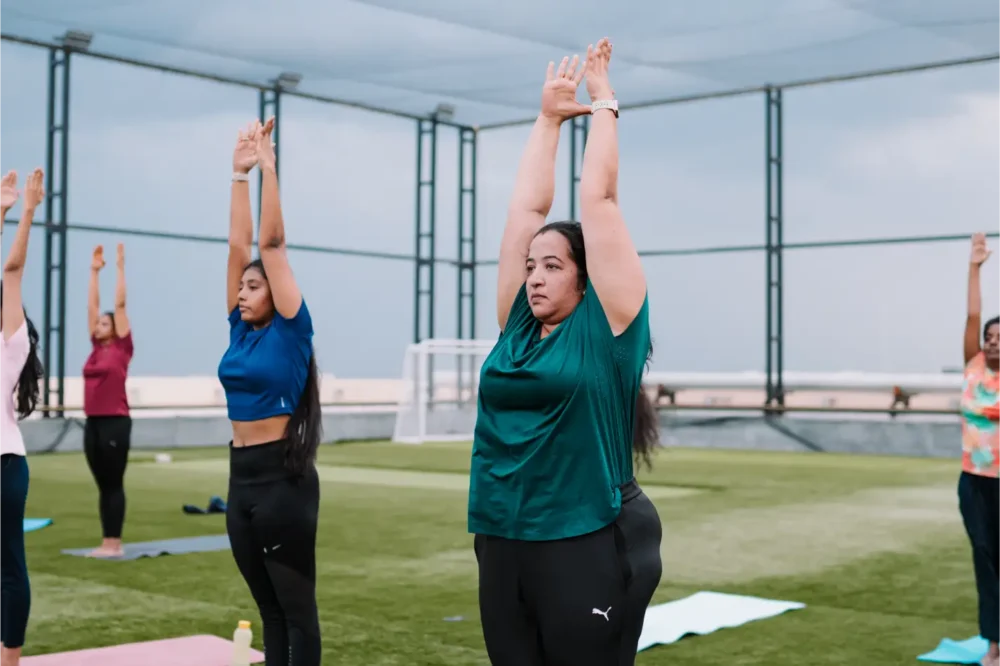
Live online yoga is a real-time, interactive fitness session conducted via video conferencing platforms. Unlike “on-demand” videos, these classes allow for two-way communication, where a professional instructor observes the student through a camera, providing immediate verbal cues, alignment corrections, and personalized encouragement.
Why It Matters: Convenience vs. Correctness
For many in Chennai, time is the greatest barrier to health. Between demanding corporate roles and family commitments, spending ninety minutes commuting for a sixty-minute class is often unsustainable. Live online yoga matters because it democratizes access to expert teaching.
However, for a beginner, the stakes are higher. Without the physical presence of a teacher, there is a minor risk of developing “compensatory movements”—where the body cheats a pose to avoid discomfort, potentially leading to strain. Understanding how to bridge this gap ensures that your home practice remains a source of healing rather than a cause of injury. It’s about balancing the modern ease of technology with the ancient precision of the craft.
How It Works: The Virtual Feedback Loop
To make a live online session “enough,” a specific feedback loop must be established between the student and the teacher. Here is how it typically functions:
- Visual Setup: You position your camera (laptop or phone) so the teacher can see your full body, from your hands in a high reach to your heels on the mat.
- The Check-in: Most live classes begin with a brief “How is your body today?” This is where you mention that tight lower back or a previous knee injury.
- Verbal Adjustments: As you move through Vinyasa or Hatha poses, the teacher will call out names: “Arun, tuck your tailbone slightly,” or “Meera, relax your shoulders.” 4. The Community Energy: Even through a screen, knowing that ten other people in different parts of Chennai are breathing with you creates a “group resonance” that keeps you motivated.
Benefits of Starting Your Journey Online
Physical & Practical
- Accessibility: You can learn from top-tier Chennai instructors regardless of which neighborhood you live in.
- Safety in Privacy: Beginners often feel less self-conscious at home, allowing them to focus on how a pose feels rather than how it looks.
- Consistency: When the “studio” is ten feet from your bed, the excuses for skipping a session vanish.
Mental & Emotional
- Reduced Stress: No traffic battles means you arrive at the start of class with a lower heart rate.
- Comfort Zone: For those with social anxiety, the screen acts as a comfortable buffer while still providing social connection.
- Focus: In a live session, you are less likely to pause the video to check your phone, a common pitfall of pre-recorded content.
How Beginners Can Approach Virtual Sessions
If you are just starting, don’t just “log on and leap.” Follow these steps to ensure your online practice is robust:
- Invest in Lighting: Make sure your room is well-lit from the front. If you are a silhouette, the teacher cannot correct your alignment.
- Use a Large Screen: Trying to follow a class on a tiny smartphone screen leads to neck strain. If possible, cast the session to your TV.
- Test Your Audio: Ensure you can hear the teacher’s breath and cues clearly over any household noise.
- Prop Up: Have “home props” ready—heavy books can act as blocks, and a sturdy belt can serve as a yoga strap.
Common Misunderstandings
- “The teacher can’t see what I’m doing wrong”: If your camera is positioned correctly, an experienced teacher can spot a misaligned knee or a rounded back from miles away.
- “It’s just a fancy YouTube video”: No. The “Live” aspect means you are being held accountable in real-time. You cannot “skip” the difficult parts.
- “I need a huge house for yoga”: You only need enough space to roll out a mat and stretch your arms out. Most Chennai apartments have a perfect “yoga nook.”
Real-World Scenarios
Scenario 1: The OMR Tech Professional
Suresh, a software lead, had chronic “desk-neck.” He was too tired to drive to a studio after work. He joined a 7:00 AM live online Hatha class. The teacher’s constant verbal reminders to “soften the jaw” and “open the chest” were exactly what he needed. For Suresh, online was more than enough—it was the only way he could actually stay consistent.
Scenario 2: The New Mother in Anna Nagar
Priya couldn’t leave her toddler to attend park yoga. By joining live virtual sessions, she regained her core strength while her child napped. The instructor provided specific “post-natal” modifications during the live feed, ensuring Priya didn’t overstrain her healing body. The virtual class became her vital “me-time” without the logistical nightmare of childcare.
Practical Tips for Online Success
- The “5-Minute Early” Rule: Log in early to chat with the teacher. This builds the rapport that makes virtual learning effective.
- Angle Your Mat: Place your mat sideways to the camera. This “profile view” is the best angle for the teacher to check your spinal alignment.
- Keep it Interactive: Don’t be afraid to unmute and ask, “Is my foot supposed to be here?” during a transition.
- Minimize Distractions: Close your door, tell your family you are “unavailable,” and treat it like a physical appointment.
Frequently Asked Questions (FAQs)
1. Is live online yoga safe for someone who has never done yoga before? Yes, as long as you choose a “Beginner Foundation” class. The teacher will move slowly and explain the terminology as they go.
2. How does a teacher correct me online? Through specific verbal cues. Instead of physically moving your arm, they will describe the sensation and direction you should be moving in.
3. Do I need to keep my camera on? For a beginner, keeping the camera on is essential. If the teacher can’t see you, they can’t keep you safe.
4. What if my internet disconnects during class? Most platforms allow you to rejoin instantly. Good instructors will also send a recording of the session if there is a major technical glitch.
5. Are online yoga classes cheaper than in-person ones in Chennai? Generally, yes. You save on travel costs, and online subscriptions often offer more classes for a lower price point.
6. Can I build a community through a screen? Surprisingly, yes. Many virtual groups in Chennai have WhatsApp communities where members share recipes, tips, and encouragement.
7. Should I do a mix of online and in-person? If your schedule allows, attending one in-person workshop a month can complement your daily online practice by providing that “physical touch” correction.
8. What is the best platform for live yoga? Zoom and Google Meet are common, but many Chennai wellness centers use dedicated apps that offer better audio/visual quality for movement.
Conclusion: Bridging the Gap
Is live online yoga enough for beginners? When approached with intentionality, it is often better than “enough”—it is transformative. It removes the friction of modern life while retaining the heart of teacher-student guidance.
In a city as vibrant and demanding as Chennai, your mat should be your sanctuary, not another chore on your to-do list. Whether you are practicing in your living room or under a Banyan tree, the goal remains the same: to breathe, to move, and to find your center.
Would you like me to recommend a few highly-rated live online yoga instructors who specialize in teaching beginners in the Chennai area?