Table of Contents
What is Interventional Pain Management? Expert 2026 Guide
Medically Reviewed by Dr. Purohithi (MBBS, MD – Anaesthesiology, Interventional Pain Specialist) Apollo Medical Centre, Kondapur, Hyderabad
Pain is the body’s alarm system. When you touch a hot stove, the pain is instant, sharp, and useful—it tells you to pull your hand away. This is called acute pain. But what happens when the alarm gets stuck? What happens when the injury has healed, but the pain signals keep firing, day after day, for months or even years?
This is Chronic Pain. It is not just a symptom; it is a disease in itself.
If you are reading this, chances are you or a loved one has been visiting multiple doctors, taking daily painkillers, and perhaps even considering major surgery out of desperation. You are not alone. Millions suffer from silent, invisible pain.
But there is a bridge between popping painkillers forever and undergoing risky surgery. It is called Interventional Pain Management (IPM).
In this comprehensive guide, Dr. Purohithi, a leading Interventional Pain Specialist at Apollo Medical Centre, Kondapur, breaks down exactly what this specialty is, how it works, and why it might be the solution you’ve been searching for.
Defining the Specialty:
What Exactly is Interventional Pain Management?
Interventional Pain Management is a medical sub-specialty devoted to the diagnosis and treatment of pain related disorders. Unlike general medicine, which treats pain with systemic drugs (pills that affect the whole body), IPM uses minimally invasive techniques to target the specific source of the pain.
Think of it like a sniper versus a shotgun.
- Oral Medication (The Shotgun): You take a pill. It goes to your stomach, enters your blood, and affects your brain, liver, and kidneys, just to dull pain in your lower back.
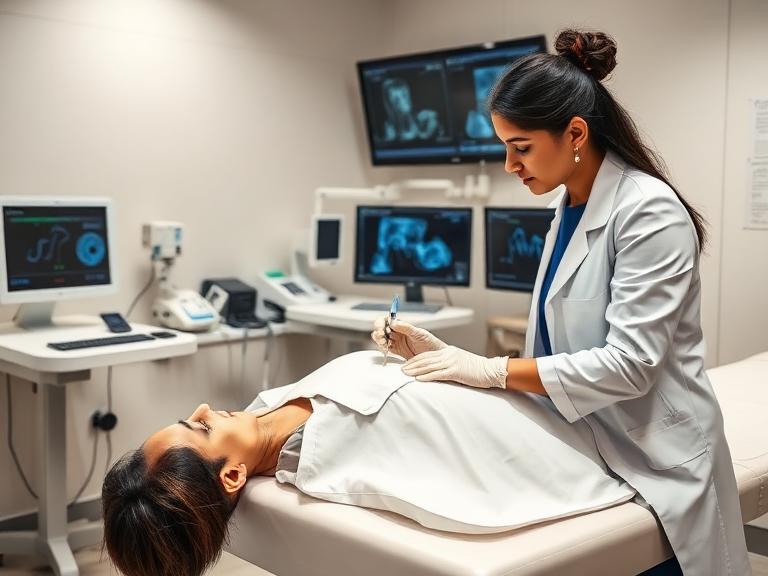
- Interventional Pain Management (The Sniper): We use advanced imaging (Ultrasound or Fluoroscopy) to guide a needle precisely to the specific nerve or joint causing the trouble. We treat only the problem area.
The Goal: Function Over Just “Relief”
While relief is the primary desire, the medical goal of IPM is broader. At Apollo Medical Centre, our objectives are:
- Reduce Pain Intensity: Bringing a “9/10” pain down to a manageable “2/10”.
- Improve Function: Helping you walk, sleep, and work again.
- Reduce Medication Reliance: Weaning patients off harmful opioids and heavy painkillers.
- Avoid Surgery: Statistics show that over 80% of back and neck pain cases can be managed without open surgery.
The Science of Pain:
To understand the treatment, you must understand the enemy. Why does chronic pain happen?
Nociceptive vs. Neuropathic Pain
Not all pain is the same. Dr. Purohithi classifies pain into two main categories to determine the treatment plan:
- Nociceptive Pain: This is pain from tissue damage.
- Examples: Arthritis in the knee, a fractured bone, or a strained muscle.
- Sensation: Aching, throbbing, or sharp.
- Neuropathic Pain: This is pain caused by damage to the nerves themselves. The “wiring” of the body is faulty.
- Examples: Sciatica, Diabetic Neuropathy, Shingles (Post-Herpetic Neuralgia).
- Sensation: Burning, electric shocks, tingling, or “pins and needles.”
The Phenomenon of Central Sensitization
“Why does it still hurt if my MRI is normal?” This is a question Dr. Purohithi hears often. The answer lies in Central Sensitization. When you are in pain for a long time, your nervous system becomes hypersensitive. It essentially “learns” to be in pain. Even a gentle touch or mild movement can trigger a severe pain response. This is why early intervention is crucial—to stop the brain from memorizing the pain.
Who is an Interventional Pain Specialist?
Many patients are confused about who to consult. An Orthopedist? A Neurologist?
An Interventional Pain Specialist, like Dr. Purohithi, is typically a doctor with a core specialization in Anaesthesiology or Physical Medicine & Rehabilitation, followed by a super-specialization fellowship in Pain Management.
Why an Anaesthesiologist?
Anaesthesiologists are the masters of nerves and physiology. They are trained to block pain during the most complex surgeries. An Interventional Pain Specialist takes that skill out of the operating room and applies it to chronic conditions. They possess:
- Deep knowledge of nerve anatomy.
- Expertise in pharmacology (medications).
- High proficiency in using needles and imaging guidance.
At Apollo Medical Centre, Dr. Purohithi combines 8+ years of Anaesthesiology experience with advanced pain intervention techniques to offer safe, hospital-grade care.

Conditions We Treat :
Interventional Pain Management covers a vast array of conditions from head to toe.
1. Spine and Back Pain (The Most Common)
- Herniated Discs (Slipped Disc): When the cushion between vertebrae leaks and presses on a nerve.
- Sciatica: Pain radiating from the lower back down one leg.
- Spinal Stenosis: Narrowing of the spinal canal (common in elderly patients).
- Facet Joint Arthritis: Pain caused by inflammation in the joints that link vertebrae.
- Spondylolisthesis: When one vertebra slips forward over another.
2. Neck and Head Pain
- Cervical Spondylosis: Wear and tear of the neck discs.
- Migraines & Tension Headaches: Chronic, debilitating headaches.
- Trigeminal Neuralgia: Severe facial pain often mistaken for dental issues.
- Occipital Neuralgia: Pain starting at the base of the skull.
3. Joint and Musculoskeletal Pain
- Osteoarthritis: Knee, hip, and shoulder pain.
- Frozen Shoulder (Adhesive Capsulitis): Extreme stiffness and pain.
- Tennis/Golfer’s Elbow: Tendonitis.
- Plantar Fasciitis: Severe heel pain, especially in the morning.
4. Neuropathic (Nerve) Conditions
- Diabetic Neuropathy: Burning sensation in feet and hands.
- Post-Herpetic Neuralgia: Persistent pain after a Shingles infection.
- Carpal Tunnel Syndrome: Wrist pain and numbness.
5. Cancer Pain
For patients battling cancer, pain can be severe. We use advanced blocks (like Celiac Plexus Blocks) to shut down pain signals from organs, providing dignity and comfort during treatment.
The Procedures – A Deep Dive
This is the “Intervention” in Interventional Pain Management. These are not surgeries; they are day-care procedures done under local anaesthesia.
1. Epidural Steroid Injections (ESI)
This is the gold standard for radiating nerve pain (Sciatica). Using fluoroscopy (live X-ray), Dr. Purohithi guides a needle into the epidural space of the spine. A powerful anti-inflammatory steroid is injected directly onto the inflamed nerve root.
- Result: Reduces swelling, allowing the nerve to heal.
2. Nerve Blocks
Nerve blocks are used for both diagnosis and treatment.
- Diagnostic Block: A small amount of numbing medicine is injected near a nerve. If the pain stops immediately, we have confirmed the source of the pain.
- Therapeutic Block: Longer-acting medication is used to provide sustained relief.
3. Radiofrequency Ablation (RFA)
What if the pain comes back after an injection? RFA is the next step. In this procedure, a specialized needle with a micro-tip is placed near the painful nerve (often in the back or knee). Radio waves are passed through the needle to create heat, effectively “burning” or deactivating the sensory nerve.
- Result: The nerve stops sending pain signals for 6 months to 2 years.
4. Joint Injections (Viscosupplementation)
For knee arthritis, we can inject hyaluronic acid (a gel-like fluid) to lubricate the joint, reducing friction and pain.
5. Regenerative Medicine (PRP Therapy)
Platelet Rich Plasma (PRP) is a revolutionary treatment. We draw a small amount of your blood, spin it in a centrifuge to concentrate the healing platelets, and inject it back into your damaged tendon or joint.
- Why it works: It triggers the body’s natural repair mechanisms.
6. Spinal Cord Stimulation (SCS)
For failed back surgery syndrome or complex pain, a pacemaker-like device is implanted to send mild electrical pulses to the spinal cord, masking pain signals before they reach the brain.

Your Journey at Apollo Medical Centre
Patients often feel anxious about visiting a pain clinic. Here is exactly what happens when you visit Dr. Purohithi at Apollo Medical Centre, Kondapur.
Step 1: The Consultation
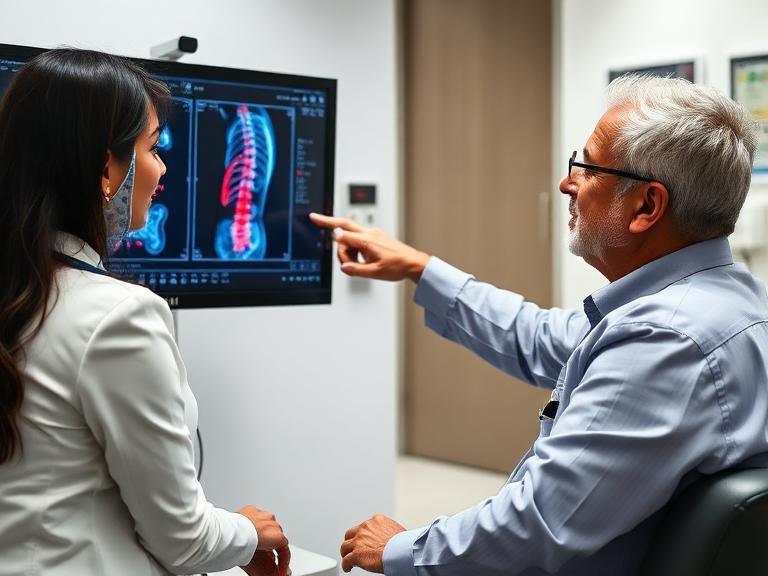
We listen. The most important diagnostic tool is your story. Dr. Purohithi will ask:
- Where is the pain?
- What makes it better or worse?
- How does it affect your sleep?
- Review of previous MRI/X-rays.
Step 2: The Physical Examination
We don’t just treat the scan; we treat the patient. Physical tests help us pinpoint if the pain is muscular, skeletal, or neural.
Step 3: The Diagnosis & Plan
You will receive a clear diagnosis. Dr. Purohithi will explain whether you need medication, physiotherapy, or an intervention.
Step 4: The Procedure (If needed)
- Setting: A sterile procedure room or cath-lab at Apollo Medical Centre.
- Anaesthesia: Local anaesthesia is used to numb the skin. You remain awake but comfortable.
- Guidance: We never inject blindly. We use Ultrasound (for soft tissue/nerves) or Fluoroscopy (for spine/bones) to see exactly where the needle is going.
- Duration: Most procedures take 15 to 30 minutes.
Step 5: Recovery
You will be monitored for about an hour and then discharged. You can usually go home and resume light activities the same day.
Myths vs. Facts
In the age of the internet, misinformation is rampant. Let’s clear the air.
Myth 1: “Pain Management just masks the pain.” Fact: While painkillers mask pain, Interventional Pain Management treats the inflammation and resets the nerve activity. By breaking the pain cycle, we allow the body to heal and facilitate rehabilitation.
Myth 2: “Steroids are dangerous and damage bones.” Fact: The steroids used in pain management are localized corticosteroids, not anabolic steroids used by bodybuilders. When used in limited doses (usually max 3 times a year) and placed precisely, side effects are minimal.
Myth 3: “These procedures are extremely painful.” Fact: We use the smallest needles possible and numb the skin first. Most patients report feeling only a pinch or mild pressure.
Myth 4: “If I have a slipped disc, I need surgery.” Fact: This is the biggest myth. 90% of herniated discs improve with conservative and interventional care. Surgery is only needed if there is progressive weakness or loss of bladder/bowel control.
The Holistic Approach (Bio-Psycho-Social Model)
Dr. Purohithi believes that treating the spine is not enough; we must treat the person. Chronic pain affects your mood, your sleep, and your relationships.
At Apollo Medical Centre, we adopt a Multimodal Approach:
- Interventions: To reduce the high-intensity pain.
- Pharmacotherapy: Optimizing medications (using nerve stabilizers rather than just painkillers).
- Physical Therapy: Strengthening the muscles to support the spine/joints.
- Psychological Support: Counseling to handle the stress and anxiety associated with chronic pain.
- Lifestyle Modification: Weight management, posture correction, and smoking cessation.
Conclusion: A Life Beyond Pain
You do not have to accept pain as a part of aging. You do not have to fear that surgery is your only road left.
Interventional Pain Management offers a scientifically proven, safe, and effective middle ground. It is about reclaiming your life—being able to pick up your grandchild, sit through a movie, or work without that nagging ache.
If you are in Hyderabad and suffering from persistent pain, Apollo Medical Centre in Kondapur offers world-class facilities combined with the expertise of Dr. Purohithi.
Don’t let pain define you. Let’s treat it together.